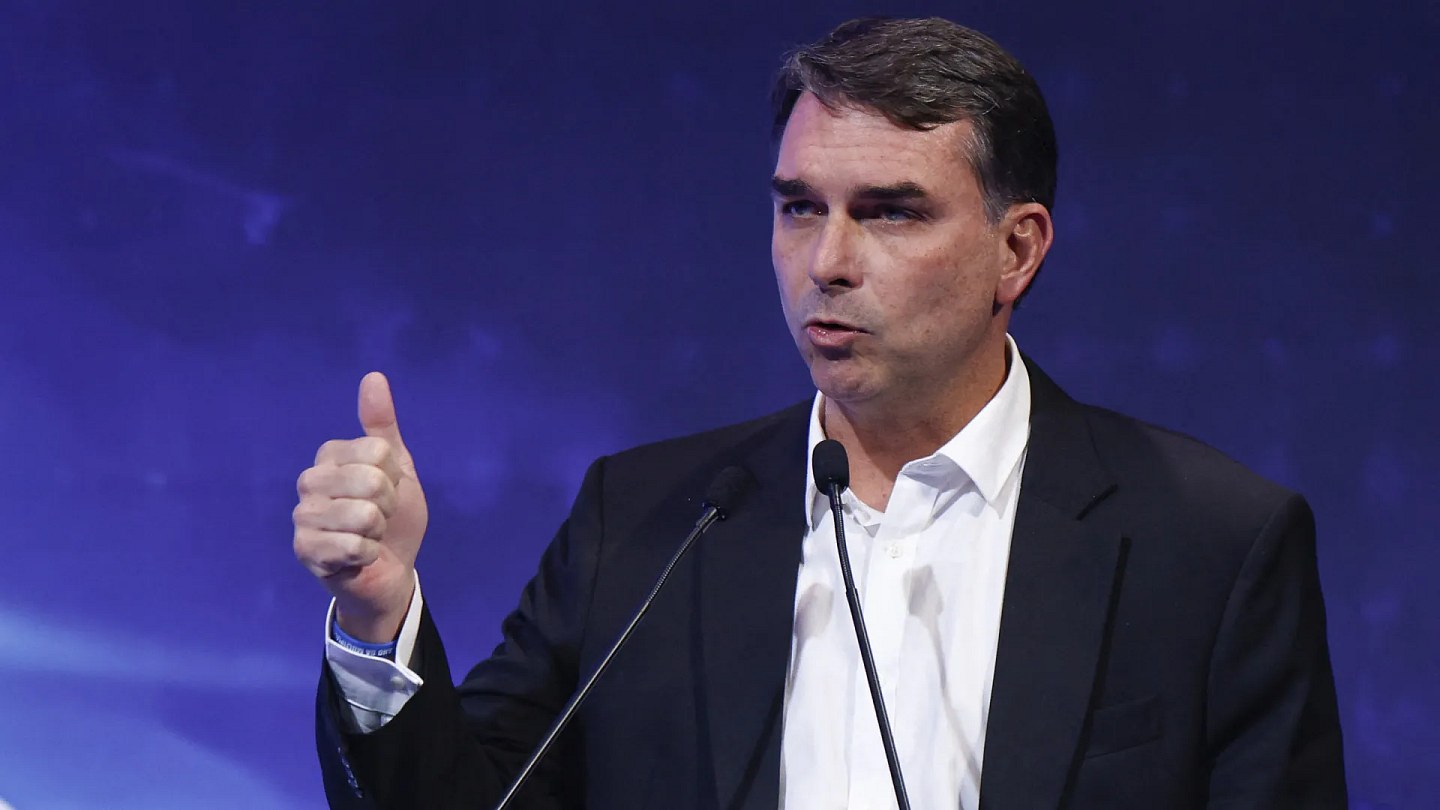
BRASÍLIA, DF (FOLHAPRESS) - Senator Flávio Bolsonaro (PL-RJ) will have 20% less electoral propaganda on TV and radio than President Lula (PT) if he remains isolated, after the "Dark Horse" case removed the support of União Brasil and PP for his presidential pre-candidacy. He seeks to reverse this with an alliance with the Republicans, which would give him a slight advantage over the PT campaign.
Flávio will have 20% less time on TV than Lula if he continues to be isolated
BRASÍLIA, DF (FOLHAPRESS) - Senator Flávio Bolsonaro (PL-RJ) will have 20% less electoral propaganda on TV and radio than President Lula (PT) if he remains isolated, after the "Dark Horse" case removed the support of...
In this election, only four candidates for the Presidency will be entitled to advertising on TV and radio: Lula, Flávio, Ronaldo Caiado (PSD) and Augusto Cury (Avante). The others, such as Romeu Zema (Novo) and Renan Santos (Missão), do not have the support of parties that have exceeded the performance clause and will therefore be left out of electoral hours.
Although social networks have gained a central role in elections, advertising on television and radio is still seen as relevant by majority campaigns. Advertising on open TV mainly reaches audiences earning up to two minimum wages, the only income range in the electorate in which Lula beats Flávio (53% to 38% in the second round, according to Datafolha of June 17 and 18).
On the radio, the propaganda reaches voters in the countryside or those traveling by car in large cities. 30 or 60 second insertions throughout the program are considered more efficient than electoral propaganda blocks, which are longer and have a smaller audience, as they allow the candidates' strengths to be reinforced and opponents' problems to be highlighted.
Lula is currently at an advantage in relation to advertising on TV and radio because he managed to unify the largest left-wing parties around his candidacy, even without gaining the support of center or center-right parties. He must run for re-election in an alliance with the federations of PT/PV/PC do B and PSOL/Rede, in addition to PDT and PSB.
Therefore, in a scenario in which Flávio remains isolated and with support only from the PL, the PT member will have an extra minute per day in the 12:30 blocks of electoral time. Lula will have 5min32s for each program, while the PL candidate will have 4min20s. Caiado will have 2min2s and Cury will have 36 seconds.
In a scenario in which Flávio gets the support of the Republicans, the PL senator will have a slight advantage over the PT member: 5min16s to 4min51s. Caiado will have 1min49s and Cury, 34s.
The PL pre-candidate works for the support of the Republicans, although the party indicates that it prefers to remain neutral in the presidential dispute. Negotiations in four states, however, could change this scenario, along with the offer of the vice-presidency on the ticket.
The PL has advanced in negotiations to support the Republican candidates for the Government of Espírito Santo and is just awaiting the decision of Senator Cleitinho Azevedo (Republicans) on running for government to announce an alliance in Minas Gerais.
On the other hand, it remains undecided in Acre, between supporting Governor Mailza Assis (PP) or Senator Alan Rick (Republicans), and will face Governor Otaviano Pivetta (Republicans) in Mato Grosso, with the candidacy of Senator Wellington Fagundes (PL).
Another deal is that the Republicans could keep the vice-president on the ticket - Flávio's preferred name is that of the former president of Caixa Econômica Federal Daniella Marques. She, however, is newly affiliated to the party and would not be the party's favorite name.
Despite these negotiations, the national president of the Republicans, Marcos Pereira, has stated that the trend today is for the party to remain neutral in the presidential elections. He is consulting state directorates to decide by the deadline, August 5th.
The leader of the party stated last week, in a note, that a survey commissioned by the party "detected a feeling of frustration regarding Flávio's pre-candidacy and an indication of a preference for neutrality in these elections".
Republican leaders say that the party had a more favorable position towards Flávio, but that the scenario changed when it was revealed in May that he asked Daniel Vorcaro, former owner of Banco Master, for money. The resources, according to Flávio, would be to pay for the film Dark Horse ("underdog"), about former president Jair Bolsonaro (PL).
This caused him to fall in the polls and also took away the support of two other parties in the center, the PP and União Brasil, which until then were the priority for the candidacy. If he managed to form a coalition that united the PL with the three acronyms, Flávio would have 6min50s of propaganda per block, almost double Lula's time, with 3min43s.
The calculation is based on the size of each candidate's coalitions and the benches elected to the Chamber of Deputies in the last election (2022). In the calculation, 10% of the time is divided equally between presidential candidates who have the support of at least one party that exceeded the performance clause, and the other 90% is divided according to the number of deputies elected by the parties that make up the candidate's ticket.
The volume of insertions in the middle of the program is proportional to the advertising time in each block of election time. In the second round, the two candidates who continue divide the time 50% each, regardless of the size of their coalitions.
Read Also: Bolsonaro's defense requests the return of Flávio's visits and claims that his son is his father's lawyer
Source: Noticias ao Minuto - Ultima Hora
This story was originally published by Noticias ao Minuto - Ultima Hora. Visit the original publication for further details.
Open original publication