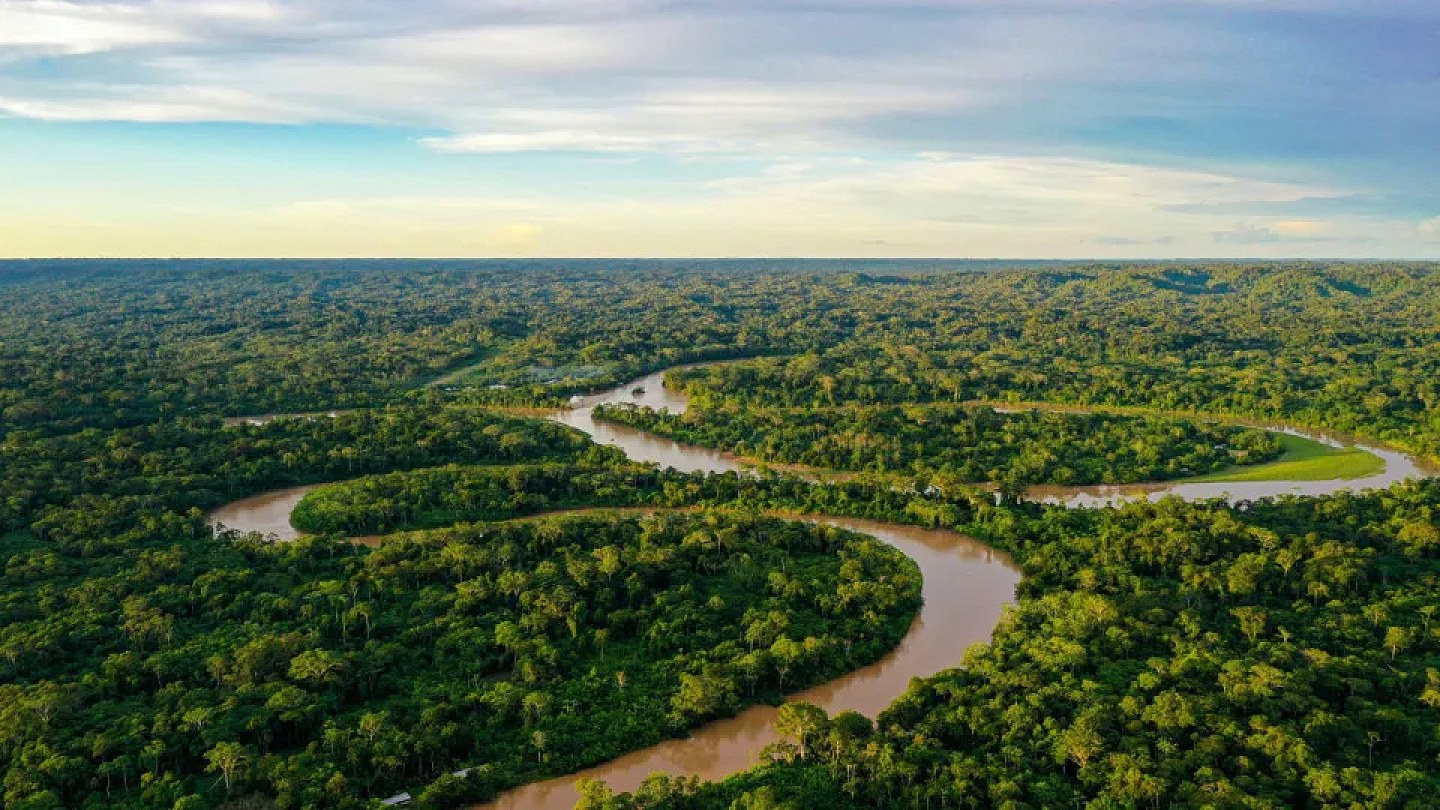
SÃO PAULO, SP (FOLHAPRESS) - The area under deforestation alert in the Amazon last year fell to the lowest level ever recorded by the Deter system, from Inpe (National Institute for Space Research), which began monitoring the biome in 2015. Between August 2025 and July 2026, 2,874 km² of forest were lost, a drop of 37% compared to the previous 12 months.
Deforestation alerts in the Amazon fall to the lowest level in the historical series
SÃO PAULO, SP (FOLHAPRESS) - The area under deforestation alert in the Amazon last year fell to the lowest level ever recorded by the Deter system, from Inpe (National Institute for Space Research), which began...
In the Cerrado, the drop was smaller, 8%, and the index stood at 5,119 km² in the same period.
The data was released in the early afternoon of this Friday (7). Normally, the indexes are updated in the early hours of Friday, on an open access portal. This time, they were publicized at an event at Inpe's headquarters, in São José dos Campos (SP), as part of the institute's 65th anniversary celebrations.
Deter issues deforestation alerts to guide inspection actions. The official numbers come from another institute system, Prodes, which is more precise and traditionally published in November.
Inpe measures the annual period of deforestation in the Amazon and the Cerrado from August 1st of one year to July 31st of the following year. This is because the dry season -which lasts mainly from July to September- has fewer clouds and better conditions for capturing satellite images, in addition to concentrating the felling of vegetation. Thus, the cut makes it possible to obtain more precise data on each deforestation "season".
The reduction in Amazon forest rates represents a victory for the resumption of policies to combat environmental destruction under the tutelage of Marina Silva (Rede), who returned to head the Ministry of the Environment and Climate Change in the third term of President Luiz Inácio Lula da Silva (PT).
In the period from August 2021 to July 2022, the last full deforestation year of the Jair Bolsonaro (PL) government, Deter recorded 8,590 km² lost in the biome - almost three times the current number.
For the coordinator of International Policy at the Climate Observatory, Claudio Angelo, this is the biggest achievement of Lula's mandate.
"The most important thing about this data is the proof that Brazil has learned to reduce deforestation", he says, explaining that reaching a very low level again shows that the result is not derived from luck, but from the application of inspection measures that work.
"Furthermore, the number demonstrates the decoupling between deforestation in the Amazon and agricultural production in Brazil, because the GDP [Gross Domestic Producer] of agriculture continues to grow with deforestation falling. In other words, there is no need to further expand the deforested area to earn more money", says the expert.
Ane Alencar, director of Sciences at Ipam (Amazon Research Institute), states that a sum of actions by the federal government explains such a reduction in deforestation rates in the Amazon: more active inspection, remotely embargoing productive areas with illegal deforestation, restricting credit to deforesters and articulation and transfer of resources to municipalities to address the problem.
"But this needs to be a permanent issue, because now we have several fights in the National Congress to destroy things that are important for this agenda, such as, for example, the reduction in the Jamanxim National Forest, the reduction of other conservation units, the restriction on remote embargo, which are important instruments", warns the researcher.
Alencar, who also studies the cerrado, states that the still very high rates of deforestation in the biome are due to greater legal difficulties. Environmental legislation is more permissive for the Cerrado, where it is possible to deforest up to 80% of rural properties - the limit in the Amazon is 20%.
Furthermore, the majority of the Cerrado is private property, while in the Amazon most of it is public land.
“So, one of the ways to reduce deforestation in the cerrado is to advance the understanding of land regularization,” she explains. "In addition, improve the licensing process, so that we can really identify what is legal and illegal, and invest in economic instruments that value those who conserve beyond the minimum required by law."
Despite not being official deforestation data, the Deter numbers point to a positive result for the Amazon forest also in Prodes.
"There is always a difference between the results of Prodes and Deter, since they use different images and have different methodologies, but in general Deter has been a good indicator of trends", says the coordinator of the Brazilian Biomes Monitoring Program at Inpe, Cláudio Almeida, in an interview with Folha.
He states that controlling deforestation in the country shows how well-designed public policies rely on concrete evidence and scientific bases.
"The existence of continuous monitoring produces data that is used to design plans to combat deforestation", he explains, highlighting the importance of Deter's daily monitoring for inspection activities.
Deforestation is the main source of greenhouse gas emissions in Brazil. In 2024, the last year analyzed, it accounted for 42% of the total carbon emitted by the country, according to data from Seeg (Greenhouse Gas Emissions and Removals Estimation System). The goal of zero deforestation is essential to fulfilling the national climate plan assumed by the federal government under the Paris Agreement.
Source: Noticias ao Minuto
Next recommended read
This story was originally published by Noticias ao Minuto. Visit the original publication for further details.
Open original publication