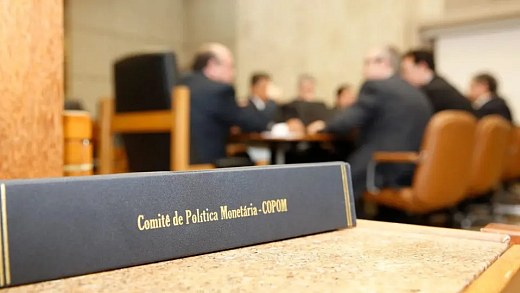
Understand what makes the price of the dollar rise or fall The dollar opened the session this Tuesday (4), on the eve of the interest rate decision by the Central Bank of Brazil. Ibovespa trading, the main index on the Brazilian stock exchange, begins at 10am. ?? Do you have any reporting suggestions? Send it to g1 ?? The new employment data from the United States is the highlight of this Tuesday's economic agenda. The numbers should give indications about the American job market and new signals about interest rates from the Federal Reserve (Fed, the American central bank). In Brazil, the focus is on the Monthly Industrial Survey (PIM) and new corporate balance sheets. ?? The market also continues to wait for the interest rate decision from the Central Bank of Brazil (BC). Scheduled for tomorrow, the expectation is that the Monetary Policy Committee (Copom) will decide on another cut in the basic interest rate (Selic), taking it to the level of 14% per year. ?? Furthermore, oil also remains in the sights of investors. Despite the contradictions regarding a possible resumption of peace negotiations between the US and Iran, the signaling of a pause in attacks increases market optimism and improves the possibility of returning traffic from the Strait of Hormuz, a route where around 20% of all global oil trade passes. Even so, oil prices fluctuate on the international market. Around 8:50 am, a barrel of Brent, an international reference, rose 0.13%, quoted at US$83.88. West Texas Intermediate (WTI), a reference in the USA, fell 0.51% at the same time, at US$ 79.93 a barrel. See below for more details on the day at the market. ?Dollar
Dollar opens lower, with US employment data in focus
Understand what makes the price of the dollar rise or fall The dollar opened the session this Tuesday (4), on the eve of the interest rate decision by the Central Bank of Brazil. Ibovespa trading, the main index on the...

a Accumulated for the week: +0.34%; Accumulated for the month: -0.34%; Accumulated for the year: -7.32%. ?Ibovespa
Accumulated for the week: 0%; Accumulated for the month: 0%; Accumulated for the year: +10.47%. Greater optimism with oil The market remains attentive to news involving the conflict in the Middle East. This Tuesday (4), sources told the Reuters news agency that the US Army used "practically the entire" stock of long-range precision missiles during the war against Iran. The sources did not say, however, how many units of each type remain. The data raises concerns about US military readiness for future conflicts. This is the first time that a low stock of these offensive missiles has been found since the beginning of the war against Iran, which entered its sixth month in August and currently has no prospect of being concluded. However, in July, a shortage of Patriot air defense batteries had already been reported by the US press. On Saturday, the American president said he would suspend a new attack on Iran as long as a deal was reached quickly to halt the country's nuclear program and reopen the Strait of Hormuz. "Iran and other Middle Eastern countries have just asked us to suspend any attacks as the terms of an agreement have been set," Trump said in a post on Truth Social. "Based on this request, I agreed, for the future benefit of the WORLD and, equally, for the survival of a successful and prosperous Iran, to cancel the attack, as long as it is possible to quickly reach an AGREEMENT", added the Republican, highlighting that Israel would join him in trying to reach an agreement. The Israeli government did not comment on the matter. In the Middle East, however, Iran denied that it had asked for a halt to attacks on the US, contradicting Trump. Citing military officials, Iranian news agency Mehr said Trump's allegation was "nothing more than a new lie" and that the Iranian military was "on high alert and ready for any eventuality", in reference to any new US attack. Global stock markets In Asia, Chinese markets rose this Tuesday (4), as shares in the artificial intelligence and chip sectors showed a strong recovery. The CSI 300, which brings together the largest companies listed in Shanghai and Shenzen, advanced 1.3%, while Hong Kong's Hang Seng fell 0.6% and Japan's Nikkei rose 0.32%. Kospi, from South Korea, rose 1.62%. *With information from Reuters news agency. Dollar bills. Murad Sezer/Reuters
This story was originally published by G1. Visit the original publication for further details.
Open original publication