Climate projections for the coming months indicate that the current El Niño episode could become one of the most intense in history. Given this scenario, expressions such as “Super El Niño”, “Mega El Niño” and even “Godzilla El Niño” began to gain space in reports and on social media. But, after all, are these terms official?
Super El Niño or El Niño? Meteorologist explains the correct name of the phenomenon that can change the planet's climate
Climate projections for the coming months indicate that the current El Niño episode could become one of the most intense in history. Given this scenario, expressions such as “Super El Niño”, “Mega El Niño” and even...
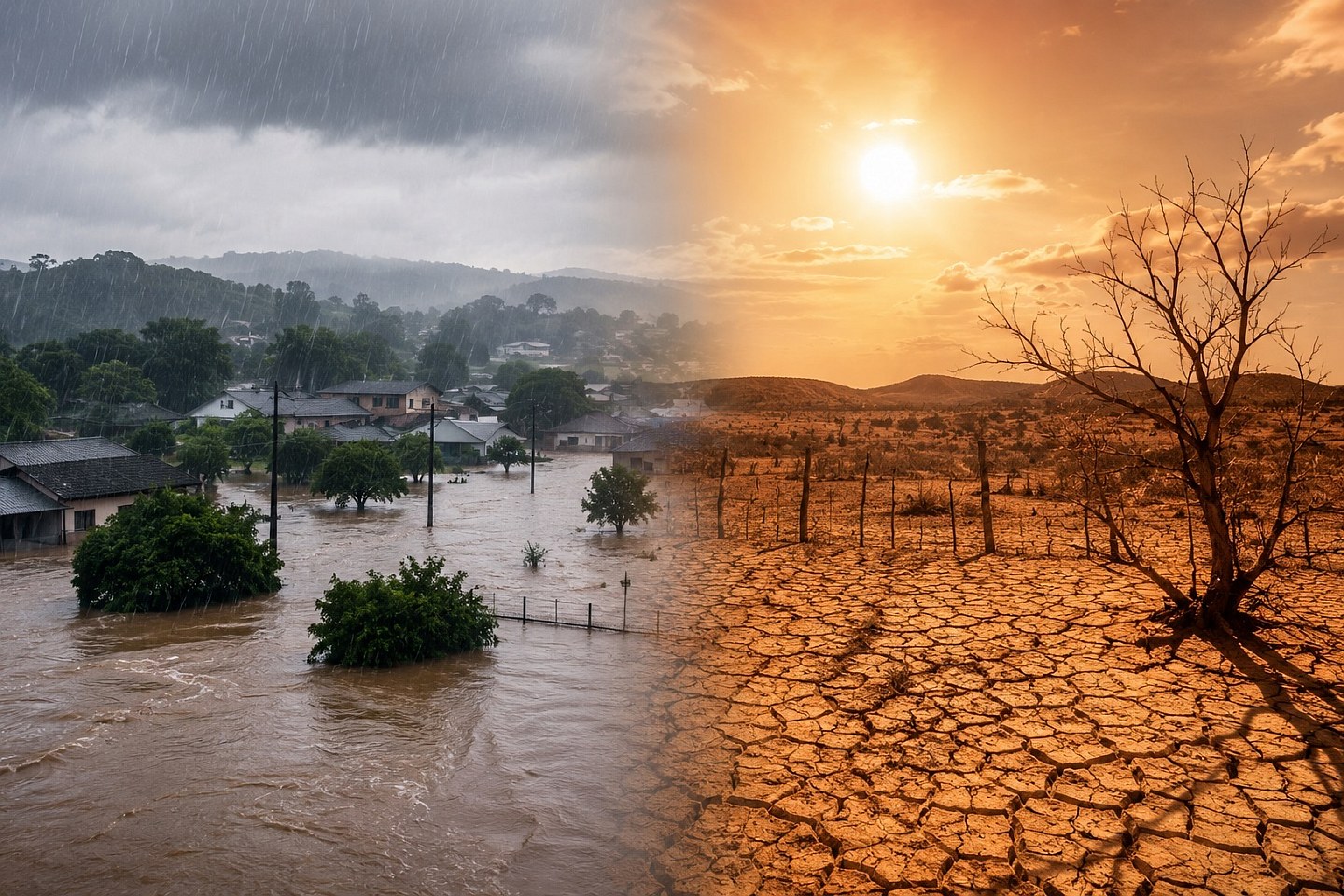
According to Arthur Müller, meteorologist at Canal Rural, the answer is no. Although the phenomenon can reach unprecedented levels of intensity, there is still no official scientific classification for episodes above the currently adopted limits.
How is El Niño classified?
El Niño is characterized by the abnormal warming of surface waters in the Equatorial Pacific. For the phenomenon to be officially configured, the temperature anomaly must remain above 0.5°C for a continuous period, allowing the so-called coupling between ocean and atmosphere.
- See first-hand everything about agriculture, livestock, economy and weather forecast: follow Canal Rural on Google News!
The classification used by the National Oceanic and Atmospheric Administration (NOAA) divides the intensity of the phenomenon as follows:
- 0.5°C to 1.0°C: weak El Niño;
- 1.0°C to 1.5°C: moderate El Niño;
- 1.5°C to 2.0°C: strong El Niño;
- Above 2.0°C: Very strong El Niño.
According to Arthur Müller, the current episode is already in the range considered strong and climate models indicate that warming could continue to advance until the end of the year.
The meteorologist explains that the problem is precisely the absence of an official scale for episodes that exceed historical marks.
"The current record occurred between 2015 and 2016, when the anomaly reached around 2.5°C. Now, some models indicate that this event could reach up to 3°C", he states.
In his assessment, the tendency is for the scientific community to need to review existing classifications, as is already happening in debates about the creation of superior categories for hurricanes and tornadoes.
“Today there is not officially a ‘super El Niño’ or a ‘mega El Niño.’ These are expressions that end up being used to convey the idea of an extremely intense event, but are not yet part of the scientific nomenclature”, he explains.
According to Müller, the change in nomenclature depends on consensus among researchers and the publication of specific scientific studies.
"In science, creating a new classification requires validation. It's not enough for someone to start using a name. There needs to be scientific work proposing this change and for it to be accepted by the community", he states.
Therefore, although it is common to find the term “super El Niño” in news and analyses, it is more accurate to say that the planet could face a very strong El Niño episode, possibly above historical records.
What is “Godzilla El Niño”?
Another nickname that has gained popularity is “Godzilla El Niño”. The expression is not part of the scientific nomenclature, but it emerged to represent the exceptional strength of an episode that deviates from historical standards.
The reference comes from Godzilla, the famous kaiju (giant monster) created by the Japanese film industry in 1954. Known for its colossal size, destructive power and for being practically indestructible, the character was born as a metaphor for the devastating power of nuclear weapons and, over the decades, has become one of the biggest icons in global pop culture.
According to Müller, nicknames like this tend to appear when a meteorological phenomenon presents an intensity much higher than what is normally observed.
“When a climate phenomenon goes beyond the limits of what we consider extreme, it usually receives nicknames linked to monsters, such as Godzilla, precisely to illustrate the enormous amount of energy involved”, he explains.
Despite the analogy, Müller reinforces that the name “Godzilla El Niño” does not mean that the impacts will be catastrophic in all regions of the planet.
"El Niño affects global atmospheric circulation. This does not mean that there will be a major flood in the South of Brazil or a historic drought in the Northeast. Extreme events can occur in different parts of the world, and the distribution of these impacts can only be assessed with greater precision as the phenomenon evolves", he states.
According to the meteorologist, the only effect considered practically certain is the increase in global temperatures and the greater probability of new heat records during the phenomenon.
The post Super El Niño or El Niño? Meteorologist explains the correct name of the phenomenon that can change the planet's climate appeared first in Canal Rural.
Source: Canal Rural
This story was originally published by Canal Rural. Visit the original publication for further details.
Open original publication