Before they enter the water, surfers will study the ocean. They consider wind and tide conditions. They analyse currents and patterns, break points and swells. They try to read the waves. I have travelled across oceans and a day to sit here on Tamarama beach in Sydney on a high-tide weekday morning in 2024. A notebook and pen lie beside me on the sand as I, too, attempt to read the waves, to find meaning in their unfathomable churn.
When my husband died in a surfing accident, life as I knew it was destroyed. Ten years on, this is what I’ve learned about grief
Before they enter the water, surfers will study the ocean. They consider wind and tide conditions. They analyse currents and patterns, break points and swells. They try to read the waves. I have travelled across oceans and a day to sit...
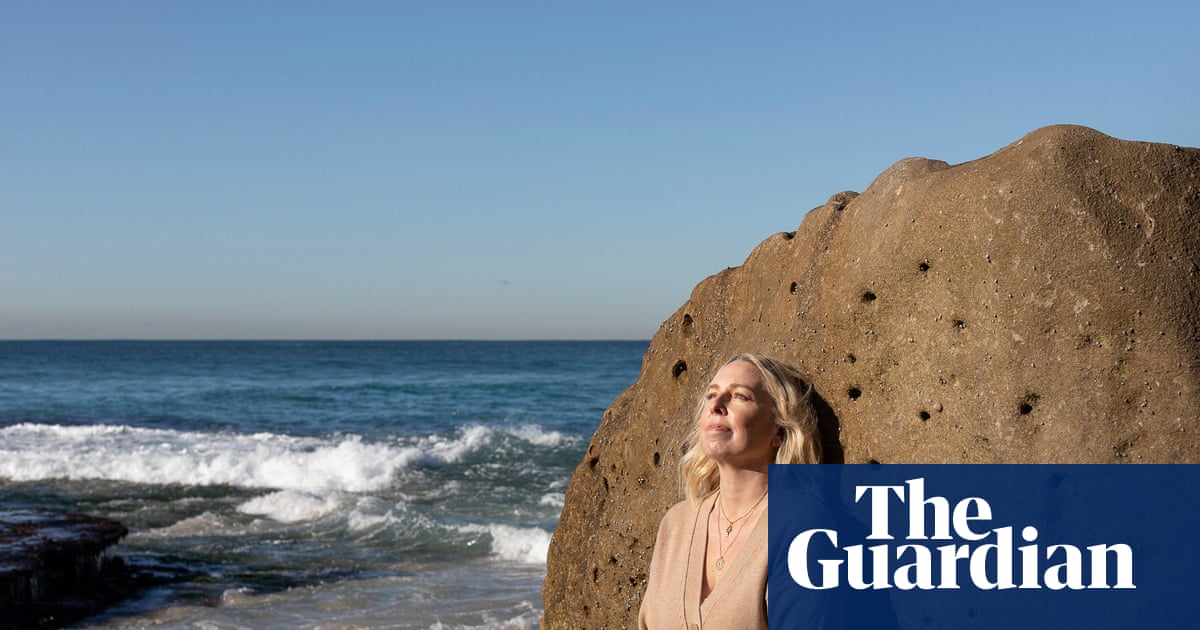
A notebook and pen lie beside me on the sand as I, too, attempt to read the waves, to find meaning in their unfathomable churn. These past 10 years, this beach has loomed large in my mind.
- Even when absent, it’s as if my face has been turned to these waves and I have been buffeted, sometimes staggering, sometimes falling, always bracing for the next set to roll in.
- For I have learned that all it takes is one ocean, one day, to come along and knock you off your feet.
Leitura editorial organizada apenas com informações contidas nesta matéria e na fonte identificada.
These past 10 years, this beach has loomed large in my mind. Even when absent, it’s as if my face has been turned to these waves and I have been buffeted, sometimes staggering, sometimes falling, always bracing for the next set to roll in. For I have learned that all it takes is one ocean, one day, to come along and knock you off your feet.
Sydney, 2014
It’s an ordinary Wednesday afternoon in Sydney, the first week of July, when two plainclothes police officers knock at our front door. I am not home to greet them. I am a few streets away, buried in my studio, wrestling with the tangled threads of a novel, when I receive a call from my husband’s PA.
“I’ve had a call from a Bondi detective,” she tells me. “They were asking for your address. I can’t reach Matt.”
I grab my laptop but leave everything else in place and try Matt’s number as I half-run, half-walk up the steep hill to our house. No answer. I call our childminder. “Weird question but has anyone come to the house?”
“Yes,” she says. Her voice is different, strained.
“Police?”
“Yes.”
The red front door to our tiny sandstone cottage is shut tight. Through the glass pane I see two figures in dark clothing standing in our living room. I fumble for my keys. The door opens and I cross the threshold.
“Hannah Richell?” they ask. I guess I nod, and they introduce themselves as police detectives. One of them, I think, has tears in her eyes.
I glance between them, my panic rising, until the more composed of the two comes right out with it. “I’m sorry to tell you your husband has been in a surfing accident.”
“Is he OK?” I’m already running through childcare options to make a hospital dash.
“I’m afraid he died.”
I’m still in my coat and boots. My laptop bag hangs from my shoulder. I look down at the old wooden chest that stands in the front room, doubling as a coffee table, and notice an unfamiliar box of tissues sitting on its surface – a box of tissues I have not bought or placed there. A small part of my brain, one not yet numbed by shock and disbelief, registers that the police must have brought it. I look at the tissues, then back to the police. My bag slides from my shoulder to the floor.
On the way to the morgue, I gaze out of the window. He is dead, I keep telling myself. You are going to view his body. But I don’t truly believe it. I will see the body and I will feel only relief, because of course it won’t be him. There is no way it can be him, my warm, vivid, drily funny, thoroughly alive husband. It will be another man, belonging to another family, who are at this very moment unaware of the tragedy that awaits them. I will leave the morgue dizzy with relief and return to the life I should be living.
But it is him.
And it isn’t.
The body in the blue gown lying on the gurney belongs to my husband, but it isn’t my husband as I knew him. What lies before me is a stiff wax model of the man I love.
Matt. But not Matt.
It is the longest, shortest, most loving, most painful hour of my life. One hour alone, to kiss and caress him. To stroke his stubbled cheek and hold his hand and lay my head upon his chest and weep. Kissing his temples, I see the cuts on his face and a diamond crosshatch line of stitches across the back of his head from the autopsy. The sight of those stitches makes me reel. They have cut open his beautiful skull. The one I absent-mindedly caressed while reading on the sofa, the prickle of his shaved head under my fingers. The one my three-year-old daughter would stroke while high on his shoulders and proclaim “spiky” with a giggle. I try not to think about what else they have had to do to him.
From our inauspicious beginning, when Matt joined the London publishing company to steal the promotion I had coveted, to a deep bond forged through travel, marriage and babies, I sit in this closed, quiet morgue and remember words written in my diary as our first new year together had raced towards us. “Don’t let him hurt me,” I had written, imploring an unseen, unknown power. I suppose I knew, even then, that a love like this could break my heart.
Wendy, a counsellor from the forensic science team, enters the room and sits quietly with me. “You’re very affectionate with him,” she says.
“I thought his eyes were opening,” I tell her, knowing how crazy I sound for still wishing that they might.
“That can happen,” she admits. “Muscles can relax.”
“He smells different.”
“They will have washed him,” she says.
Though not as carefully as they’d intended, perhaps, for when I try to hold his stiff hand, grains of Tamarama sand fall from his palm into mine. They feel like a last gift: a piece of the country he loved so deeply. Precious. I want to scoop the sand up and take it home with me, carry the grains around in a locket, but they slip through my fingers and fall to the floor, disappearing with the sound of my crying and the last kiss I leave on his lips.
I text Adam, the friend who was with Matt when he died. “Hi, this is Hannah, Matt’s wife. Yesterday must have been terrible. Are you OK?” We tread carefully, cautiously polite, until Adam offers to come to our home and talk me through what happened. He is a virtual stranger at my front door, but the moment he steps over the threshold, I am with him. The connection feels instant and real. We sit for a couple of minutes on the sofa in our front room, but the kids are noisy in the background and the house feels claustrophobic and all wrong. “I need to get out of here. Can we get some air?”
Adam looks relieved.
We walk to the park and sit on the grass. It is strange but, out here, in the sunshi