Why do bananas go dull? Phenomenon generates losses of R$ 100 million during winter Have you ever been to the market and noticed that some bananas have a duller color compared to others? In the state of São Paulo, low winter temperatures affect the appearance of bananas grown in the Ribeira Valley, located on the border with Paraná (PR). The phenomenon, known as chilling, causes an estimated loss of R$100 million in the region's economy. ?Chilling, or cold, is a physiological disorder that causes darkening of the skin, brownish or grayish spots and superficial depressions in bananas exposed to temperatures below 13°C (see below). ?Click here to follow the g1 Santos channel on WhatsApp. According to the Association of Banana Growers of Vale do Ribeira (Abavar), the change in color causes a depreciation of approximately R$ 1.00 per kilo of fruit in relation to those produced in the North of Minas Gerais (MG) at the same time. "We couldn't even reach the market value", explained the director of Abavar, Felipe Trigo. Banana without chilling (on the left) and after the physiological disturbance (on the right) Abavar and Marcelo Brandt/g1 The director added that, despite the opaque appearance, there is no change in the pulp, which remains suitable for consumption. He stated that, in many cases, the fruit affected by chilling has a sweeter flavor. This is because bananas in the region take up to 150 days to be harvested, allowing for greater storage of sugar. In regions with predominantly tropical climates, they are harvested within 90 days. Banana is the most consumed fruit in Brazil To combat devaluation, the association's idea is to use the Geographical Identification (GI) seal, issued by the National Institute of Industrial Property (INPI), so that consumers can recognize the quality of the fruit even with blemishes. “We want to prove that bananas from this season are a unique, differentiated product, which can have a much greater added value”, said Trigo. What is chilling? The visual change is the result of chilling, which occurs when bananas are exposed to temperatures below 13°C. According to the Brazilian Agricultural Research Corporation (Embrapa), the cold mainly damages the fibers in the fruit skin. The action causes a kind of burn, causing the banana to lose its intense yellow and become more opaque in color. The flavor, however, is not compromised in most cases. “Buyers end up not wanting this fruit,” said the director of Abavar. To g1, he stated that research had already been carried out to produce special bags to prevent the disorder from occurring, but the attempts were unsuccessful. “We used some types of bags that we could find, but we opened a hole and the bananas rotted”, he added. Brazil ranks among the 3rd and 4th largest banana producers in the world. Art/G1 VIDEOS: g1 in 1 minute Santos
Why do bananas go dull? Phenomenon generates losses of R$ 100 million during winter in SP
Why do bananas go dull? Phenomenon generates losses of R$ 100 million during winter Have you ever been to the market and noticed that some bananas have a duller color compared to others? In the state of São Paulo, low winter temperatures...
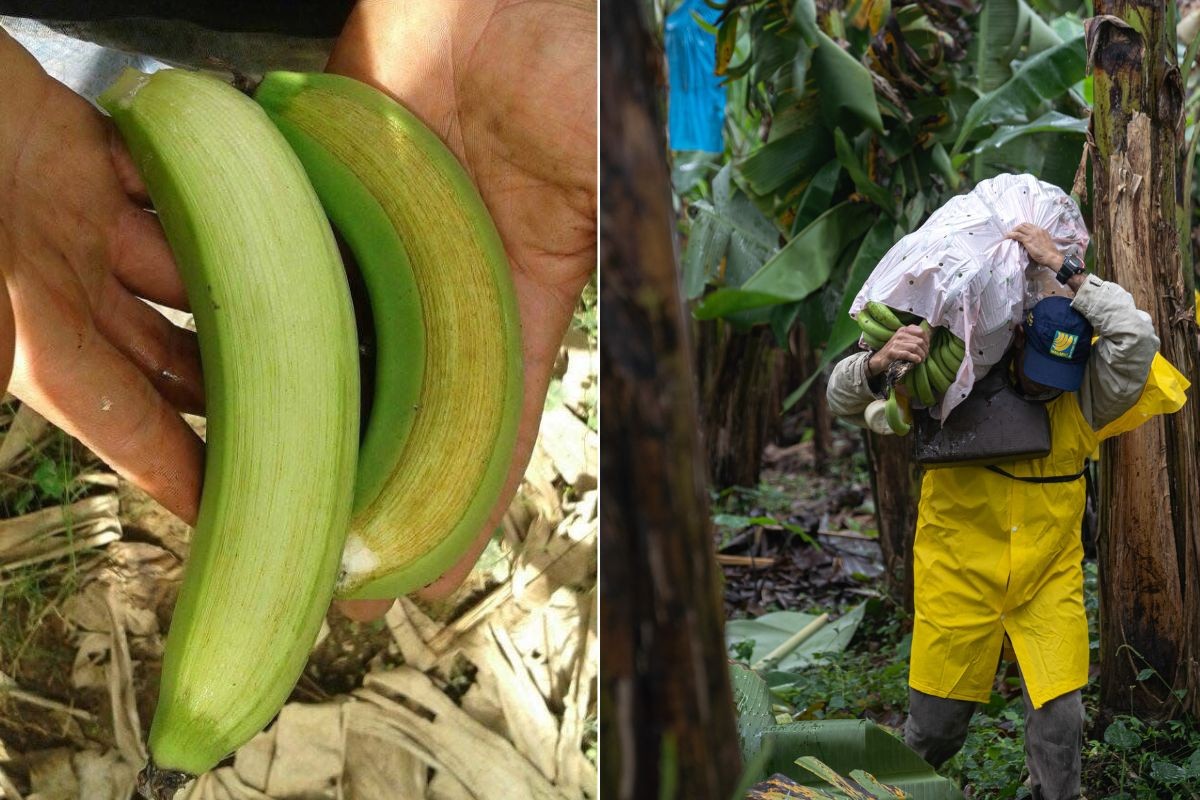
The phenomenon, known as chilling, causes an estimated loss of R$100 million in the region's economy. ?Chilling, or cold, is a physiological disorder that causes darkening of the skin, brownish or grayish spots and superficial depressions in bananas exposed to temperatures below 13°C (see below).
- ?Click here to follow the g1 Santos channel on WhatsApp.
- According to the Association of Banana Growers of Vale do Ribeira (Abavar), the change in color causes a depreciation of approximately R$ 1.00 per kilo of fruit in relation to those...
Editorial reading aid based only on information contained in this story and its identified source.