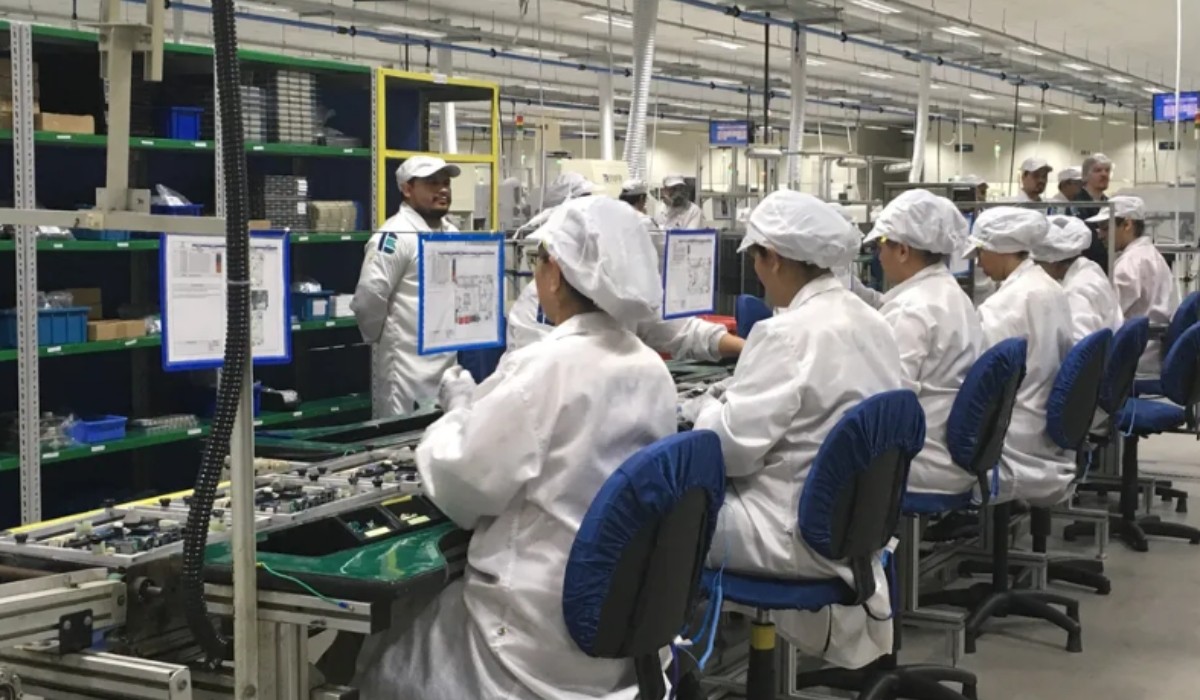
Production line Manaus Industrial Center Photo: Archive g1 AM Gone are the days when business logic seemed simple: competing companies fought for customers, markets and technology. The greater the secrecy surrounding an innovation, the greater the competitive advantage. This logic, however, has been rapidly transformed by a new technological and economic reality. The recent announcement that Yamaha will use an electric motor and batteries developed by Honda in its new electric mopeds aimed at the urban delivery market, recently launched in Japan, is one of the most recent examples of this change. At first, the news is strange. After all, why would two companies competing in the same market share a technology considered strategic? The answer helps to understand one of the most profound transformations that global industry is going through. The advancement of electrification, artificial intelligence, connectivity and embedded software has increased the cost of innovation to a level that few companies can sustain alone. Instead of doubling investments in technologies that can be shared, many organizations began to divide platforms, knowledge and infrastructure, focusing their efforts on what really differentiates them in the eyes of the consumer: the brand, design, experience, quality and relationship with the market. This model has gained a name that is increasingly present in the business environment: coopetition, a concept that combines cooperation and competition. In practice, companies continue to compete for the same customers, but begin to cooperate in strategic areas in which sharing risks, costs and development time is more efficient than acting in isolation. Although the partnership between Honda and Yamaha has recently attracted attention, this initiative is far from being an isolated and recent case. In 2021, Honda, Yamaha, KTM and Piaggio created a consortium to develop a common standard for removable batteries for electric motorcycles, recognizing that the expansion of this market would also depend on the construction of shared solutions. Another example emerged a few days ago, when the Administrative Council for Economic Defense (Cade) approved, without restrictions, the creation of the joint venture between Foxconn and Mitsubishi Fuso for the development of sustainable and zero-emission buses. The decision demonstrates that, when well structured, strategic alliances between companies can stimulate innovation without compromising free competition. On the contrary, they expand investment capacity, accelerate technological development and strengthen the entire production ecosystem. This is probably one of the main characteristics of the new industrial economy. Competition has not disappeared. It just changed settings. Increasingly, companies are no longer competing exclusively with each other to compete for space among innovation ecosystems. The competitive advantage is no longer just in developing everything internally, under absolute secrecy, but also in the ability to build strategic alliances, share skills and reduce the time needed to transform knowledge into new products and solutions aligned with market demands. This transformation deserves special attention at the Manaus Industrial Pole (PIM). Responsible for practically all national production of motorcycles and a significant portion of the Brazilian electronics industry, the Polo brings together, in the same environment, some of the largest global companies in these segments. They are competitors in the market, but they share similar challenges, such as electrification, the digitalization of production processes, the incorporation of artificial intelligence, the training of specialized labor and the strengthening of the supply chain. In this context, cooperation is no longer just an international trend and also represents a strategic opportunity for the Amazonian industrial ecosystem. Research and development institutes, universities, startups, suppliers and the industries themselves located in the PIM can increase their competitiveness by developing solutions of common interest, preserving, at the same time, what constitutes the essence of competition between companies: innovation applied to their products, their brands and their markets. Understanding this new logic means understanding where global industry investments are headed. The trend indicates that it will be increasingly important to observe how companies are structuring their innovation strategies, which goes far beyond monitoring production, revenue or export indicators. Those who learn to cooperate on common technologies are able to direct more resources to what really generates differentiation and added value. This requires increasingly strategic management, capable of identifying which skills must remain exclusive and which can be developed in partnership to accelerate competitiveness. Perhaps the biggest transformation is not in the electric motorcycle, the zero-emission bus or the next generation of batteries, but, above all, in the change in mentality. In an environment of accelerated innovation, cooperating is no longer just an alternative between competitors. It became a business strategy. In relation to PIM, this change brings an important reflection. In a scenario where innovation is increasingly built on a network, competitiveness will not only depend on the ability to produce more or reduce costs. It will also be in the ability to integrate companies, suppliers, research centers and talents around common challenges, strengthening an ecosystem capable of innovating faster and generating greater value for Brazilian industry. Cristina Monte is a journalist, columnist and business analyst, specializing in covering industry, innovation and economic development in the Amazon.
Why did rival companies start to cooperate? The new industry logic and its effects on PIM
Production line Manaus Industrial Center Photo: Archive g1 AM Gone are the days when business logic seemed simple: competing companies fought for customers, markets and technology. The greater the secrecy surrounding an innovation, the...
The recent announcement that Yamaha will use an electric motor and batteries developed by Honda in its new electric mopeds aimed at the urban delivery market, recently launched in Japan, is one of the most recent examples of this change. After all, why would two companies competing in the same market share a technology considered strategic?
- The answer helps to understand one of the most profound transformations that global industry is going through.
- The advancement of electrification, artificial intelligence, connectivity and embedded software has increased the cost of innovation to a level that few companies can sustain alone.
Editorial reading aid based only on information contained in this story and its identified source.