United States Treasury Secretary Scott Bessent raised his tone against Iran and stated that Washington could impose economic isolation on the country “like the world has never seen”. The threat comes just days after the American government indicated that it was negotiating an agreement to reopen the Strait of Hormuz.
United States threatens Iran with "unprecedented" economic isolation
United States Treasury Secretary Scott Bessent raised his tone against Iran and stated that Washington could impose economic isolation on the country “like the world has never seen”. The threat comes just days after the American government...
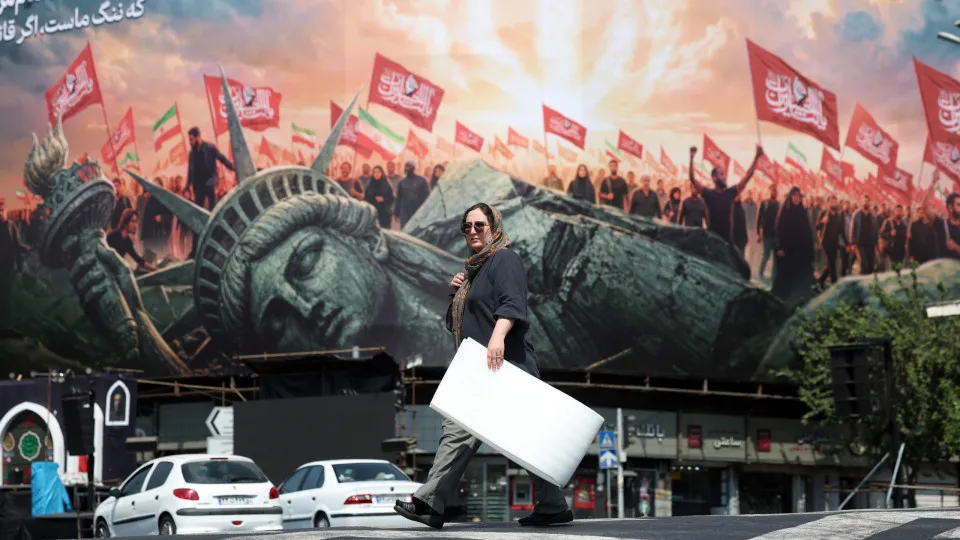
In an interview with conservative broadcaster Newsmax on Thursday, Bessent said that the American strategy could combine new economic sanctions with maintaining the blockade of the strait, making it difficult for goods to enter and leave Iranian ports. “It will be a combination of economic isolation like the world has never seen and the continued blockade...
- “It will be a combination of economic isolation like the world has never seen and the continued blockade of the Strait of Hormuz, which will prevent anything from entering or leaving...
- The secretary did not detail what measures are being prepared, but anticipated that new announcements could take place next week.
- The statement contrasts with the tone adopted by Washington in early August.
Editorial reading aid based only on information contained in this story and its identified source.
In an interview with conservative broadcaster Newsmax on Thursday, Bessent said that the American strategy could combine new economic sanctions with maintaining the blockade of the strait, making it difficult for goods to enter and leave Iranian ports.
“It will be a combination of economic isolation like the world has never seen and the continued blockade of the Strait of Hormuz, which will prevent anything from entering or leaving Iranian ports,” he said.
The secretary did not detail what measures are being prepared, but anticipated that new announcements could take place next week.
The statement contrasts with the tone adopted by Washington in early August. On the 4th, Bessent stated that an understanding with Tehran to reopen Hormuz could be reached quickly. On the same date, the President of the United States, Donald Trump, declared that the talks were progressing and stated that Iran showed interest in closing an agreement.
At the time, signs of a possible diplomatic solution had repercussions on the markets, with a rise in New York stock exchanges and a sharp drop in oil prices.
The rhetoric has once again hardened as the war, which began in late February following an offensive by the United States and Israel against Iran, approaches its sixth month.
A memorandum of understanding reached in June with the aim of definitively ending the conflict collapsed in early July. At the end of that month, Trump suspended the attacks, but made the interruption of military actions conditional on the rapid conclusion of an agreement.
On August 1, the American president stated that any understanding would need to include the “complete and total” opening of the Strait of Hormuz and the end of the Iranian nuclear threat. Since then, Washington has focused part of the pressure on Tehran in the economic field.
Strait of Hormuz concentrates tensionThe Strait of Hormuz remains one of the main points of friction in the conflict. Before the war, approximately one-fifth of the oil traded in the world passed through the sea route.
On Thursday, the United Arab Emirates reported an Iranian attack on two ships belonging to state oil company ADNOC while passing through the strait. There were no injuries reported.
The Emirati government condemned the episode and asked Iran to reopen the sea route “totally and unconditionally”.
Tehran, on the other hand, disputed Donald Trump's statements about the situation in the region. The American president had stated, on Wednesday, in a publication in Truth Social, that the United States had total control over the Strait of Hormuz.
Ebrahim Zolfaghari, spokesman for the Khatam al-Anbiya Central Command, rejected the claim and declared that the crossing remains under the “complete management and control of the Islamic Republic.”
Also on Thursday, Iranian Foreign Minister Abbas Araghchi accused the United States of making “miscalculations” related to intelligence failures.
“An example: the war against Iran. Now, an even bigger miscalculation regarding the Strait of Hormuz,” wrote Araghchi on the social network X.
The U.S. has long miscalculated due to intelligence failures. Case in point: The war on Iran. Now, an even bigger miscalculation on the Strait of Hormuz. Worse than fake news is fake intelligence. Be careful. Allah is Great, Greater than ANY power on Earth. In Allah we trust.
Iran keeps Strait of Hormuz closed until US accepts conditions
The new secretary of Iran's Supreme National Security Council, Mohsen Rezaei, warned today that the Strait of Hormuz "will not be opened" until the United States "changes its behavior and accepts the conditions" of Tehran.