The President of the United States, Donald Trump, announced this Wednesday (19) a new economic offensive against Iran, which he classified as the "most devastating economic operation ever undertaken against any country".
Trump launches devastating and unprecedented economic war against Iran
The President of the United States, Donald Trump, announced this Wednesday (19) a new economic offensive against Iran, which he classified as the "most devastating economic operation ever undertaken against any country". In a post on Truth...
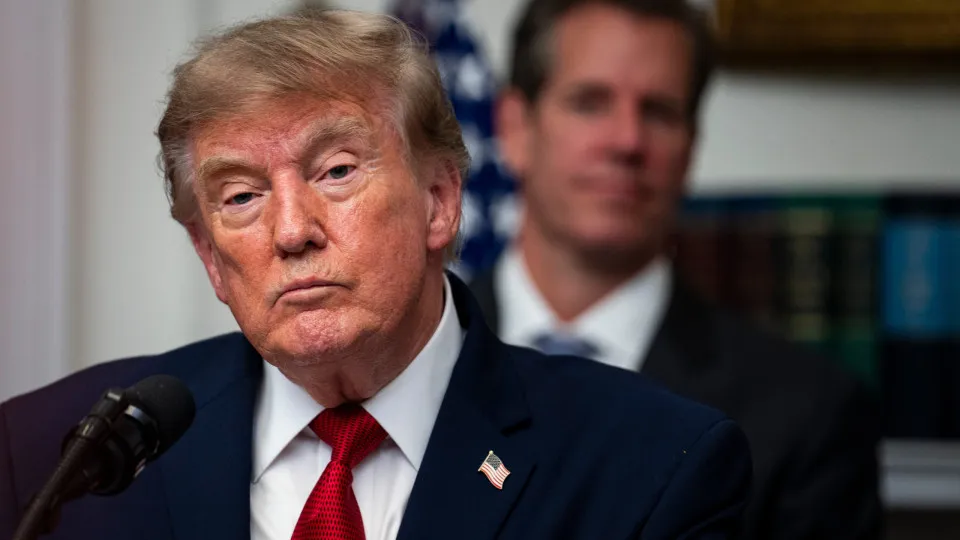
According to the US president, the new offensive aims to disrupt the mechanisms used by Tehran to circumvent sanctions and maintain the circulation of resources. These include oil smuggling, foreign exchange operations, cash transfers, exchange offices, ship registrations and shell companies.
- Trump demanded that these operations "stop NOW" and stated that Washington will closely monitor countries and entities that continue to allow this type of activity.
- The Republican presented the measure as a new stage in United States pressure on the Iranian government.
Editorial reading aid based only on information contained in this story and its identified source.
In a post on Truth Social, Trump warned that any country that allows financial institutions, businesses, airports or government entities to offer "any type of lifeline" to Iran will also face economic consequences.
According to the US president, the new offensive aims to disrupt the mechanisms used by Tehran to circumvent sanctions and maintain the circulation of resources. These include oil smuggling, foreign exchange operations, cash transfers, exchange offices, ship registrations and shell companies.
Trump demanded that these operations "stop NOW" and stated that Washington will closely monitor countries and entities that continue to allow this type of activity.
The Republican presented the measure as a new stage in United States pressure on the Iranian government. According to him, Iran's Armed Forces were severely weakened after recent clashes, while the country's economy was close to collapse.
"This will be an economic D-DAY", said Trump, as he asked US allies to participate in the isolation of Iran. The president also said again that his government will not allow Tehran to obtain a nuclear weapon.
Trump admits possible resumption of negotiations
Before the announcement of the new economic offensive, Trump had stated that Washington and Tehran could, "perhaps at some point", resume negotiations to try to end the war.
The president also positively assessed the current situation in the Strait of Hormuz and said that many oil tankers are managing to cross the passage without problems.
"Maybe at some point, although right now I think the situation [in the Strait of Hormuz] is very good. But yes, maybe at some point," Trump responded at the White House when asked about the possibility of further talks.
The declaration came after the end of the bilateral ceasefire signed in June, which expired on Monday (17).
After the attack by the United States and Israel against Iran on February 28, Tehran responded with attacks against neighboring countries allied with Washington and blocked the Strait of Hormuz, one of the world's main routes for transporting oil and other energy products. The United States, in response, imposed a blockade on Iranian ports.
Although hostilities have recently eased, tensions remain high in the sixth month of conflict, while attempts at diplomatic negotiations remain stymied.
"No conversations or discussions are taking place at this time nor are they scheduled with the Islamic Republic of Iran," Trump declared on Tuesday (18).
According to a North American source interviewed by the France-Presse agency, the negotiations were suspended and Trump instructed his team not to resume the dialogue until Tehran approaches the positions defended by Washington.
Iran conditions reopening of Strait of Hormuz
The Iranian government, however, has given few signs that it intends to meet American demands.
The country's main negotiator, Mohammad Bagher Ghalibaf, stated that the Strait of Hormuz will not be reopened until Washington fulfills the commitments set out in the protocol signed between the two countries in June.
The document established a 60-day truce and provided for negotiations to reach a more lasting solution to the conflict. The understanding lost effect after the resumption of hostilities in July.
Ghalibaf, who visited Baghdad this Wednesday, also denounced "foreign interference" at a time when the United States is pressuring Iraq to disarm armed groups supported by Tehran. The Iranian negotiator also defended "regional reinforcement".
At the same time, Iran and Oman, the two countries that border the Strait of Hormuz, have been discussing for several weeks how the future management of the maritime passage could work.
Iran, which has attacked vessels trying to cross the strait without authorization, intends to charge navigation fees for services offered to ships in transit. The proposal is rejected by the United States and other countries in the region.
Trump publishes map showing Strait of Hormuz as US territory
Publication in Truth Social comes after the North American president defended the idea of declaring the strategic maritime passage as United States territory. Iran says it will keep the strait closed until Washington meets the conditions set out in the June interim agreement