Technology created in RS increases the chances of heart transplants A technology developed in Rio Grande do Sul is doubling the safe time for transporting hearts and increasing the chances of patients waiting for a transplant in Brazil. Created by a company from Santa Rosa in partnership with the Institute of Cardiology, in Porto Alegre, the equipment reduced waiting time in line and increased the number of donations. ? Access the g1 RS channel on WhatsApp Before the innovation, the organ was carried in a Styrofoam box with ice, which limited doctors' time to perform the transplant to a maximum of four hours. With the new device, called Taura, this time has doubled, allowing organs to travel greater distances between donors and surgical centers. The partner of the manufacturer Biotecno, Lidia Linck, explains that the device maintains a controlled temperature, varying from 4°C to 10°C, depending on the organ transported. "The big difference with Taura is that it has a battery, can be connected to aircraft and vehicles, communicates through an app and allows temperature monitoring throughout the transport period, so you can be sure that this organ has been stored very well", he details. Although there are already similar imported technologies, they are disposable, which makes the cost unfeasible for the Brazilian reality. The difference with the Gaucho model is that it is reusable. In 10 months of use, the equipment has already enabled 20 heart transplants at the Institute of Cardiology. The experience has also reached three other important transplant centers in the country. The surgical director of the Heart Transplant Program at the Cardiology Institute of Rio Grande do Sul, Juglans Souto Alvarez, highlights that the device expanded the safety radius of air transport to two thousand kilometers. "We can go to Brasília, Rio de Janeiro, even Salvador, depending on the aircraft. We cover half of Brazil safely and this has greatly increased the number of donors", he states. According to the doctor, the innovation changes the perspective on the availability of organs in the country. "We can offer more transplants to the population that needs them and break this myth that there is no point in offering transplants because there are few organs. In fact, we are showing that in Brazil there are many organs and we have to use this pool", adds Alvarez. Transformed lives The expansion of the collection network directly impacts the lives of patients. Criminal police officer Vanderlei Guedes Marques suffered three cardiopulmonary arrests in 2023. As a result of the lack of blood circulation, the left side of his heart stopped and the muscle died. The only solution suggested by doctors was transplantation. Vanderlei's concern quickly gave way to hope. "After I did all the tests, after I got on the transplant queue, it took two days. It was a surprise when the doctor came into the room and said he had a heart for me", he recalls. Two and a half months after surgery, the criminal police officer celebrates his recovery. "Before I had the transplant, I couldn't walk very far, I was panting, short of breath. And now I can go further than I used to. I can sleep well", he says. Referee Amanda Santos, 32 years old, also benefited from the technology. The heart she received came from another state. "I want to enjoy my life now with my daughters. Everything I went through and was away from them, I want to recover, enjoy my family. A new life, a chance I had, a hope to continue living", she celebrates. A resident of Cruz Alta, Amanda is awaiting medical clearance to return to refereeing amateur football matches and dreams of greater heights in her career. "I can already see myself returning to play at least the first game there, in the floodplain, in my city. Everyone knows me, respects me. But in the future I want to get there, Gauchão, who knows", he projects. Technology created in RS increases the chances of heart transplants and increases the distance that can be covered safely Reproduction/RBS TV VIDEOS: Everything about RS
Technology created in RS increases the chances of heart transplants and increases the distance that can be covered safely
Technology created in RS increases the chances of heart transplants A technology developed in Rio Grande do Sul is doubling the safe time for transporting hearts and increasing the chances of patients waiting for a transplant in Brazil....
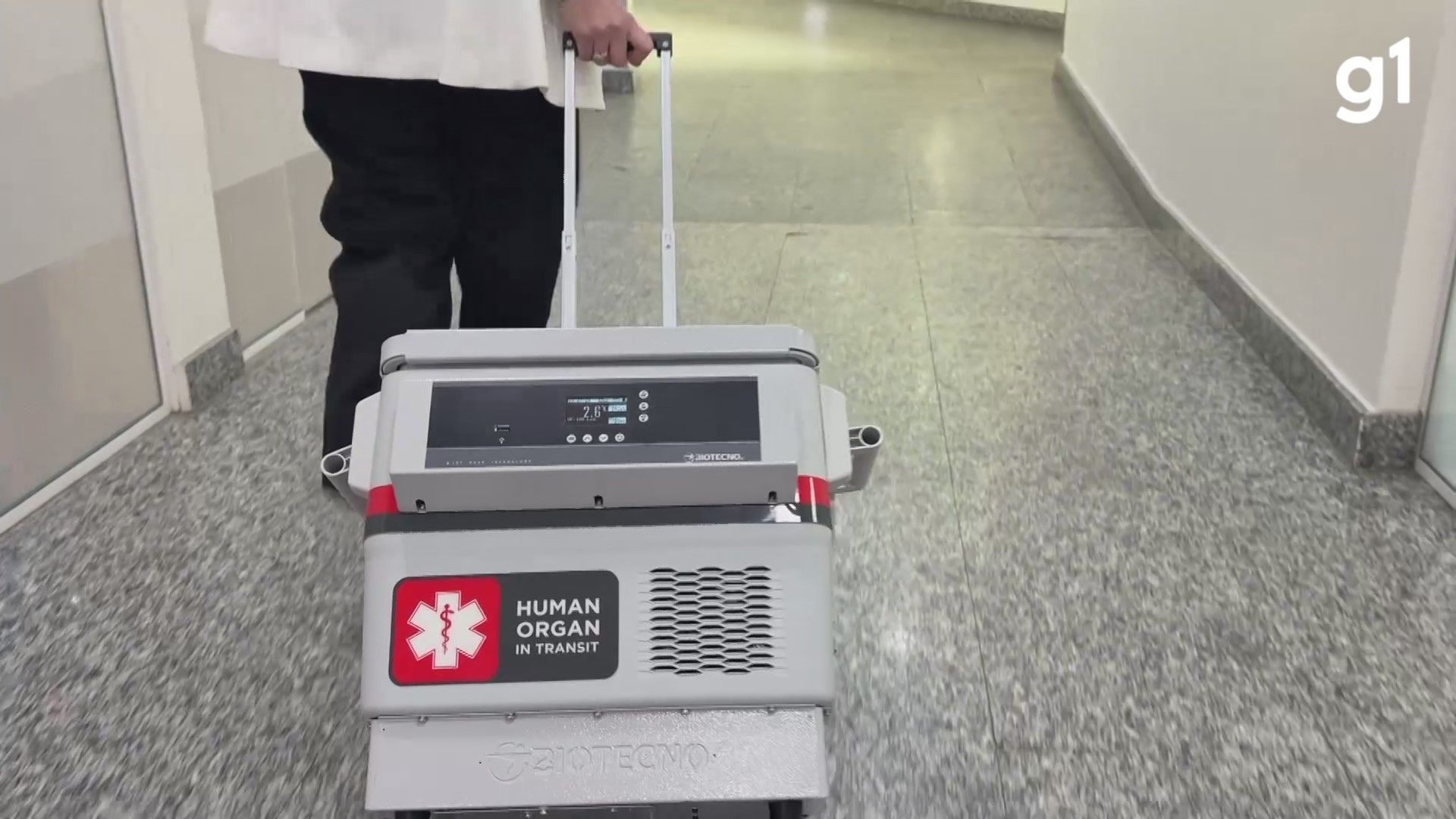
Access the g1 RS channel on WhatsApp Before the innovation, the organ was carried in a Styrofoam box with ice, which limited doctors' time to perform the transplant to a maximum of four hours. With the new device, called Taura, this time has doubled, allowing organs to travel greater distances between donors and surgical centers.
- The partner of the manufacturer Biotecno, Lidia Linck, explains that the device maintains a controlled temperature, varying from 4°C to 10°C, depending on the organ transported.
- "The big difference with Taura is that it has a battery, can be connected to aircraft and vehicles, communicates through an app and allows temperature monitoring throughout the transport...
Editorial reading aid based only on information contained in this story and its identified source.