The first test flight of the South Korean SEBIT rocket from Brazil lasted just a few seconds. Launched on Wednesday (19), at the Alcântara Launch Center, in Maranhão, the vehicle presented a change in trajectory and the mission was terminated for safety reasons.
South Korean rocket deviates from its route and is shot down by the FAB in Maranhão
The first test flight of the South Korean SEBIT rocket from Brazil lasted just a few seconds. Launched on Wednesday (19), at the Alcântara Launch Center, in Maranhão, the vehicle presented a change in trajectory and the mission was...
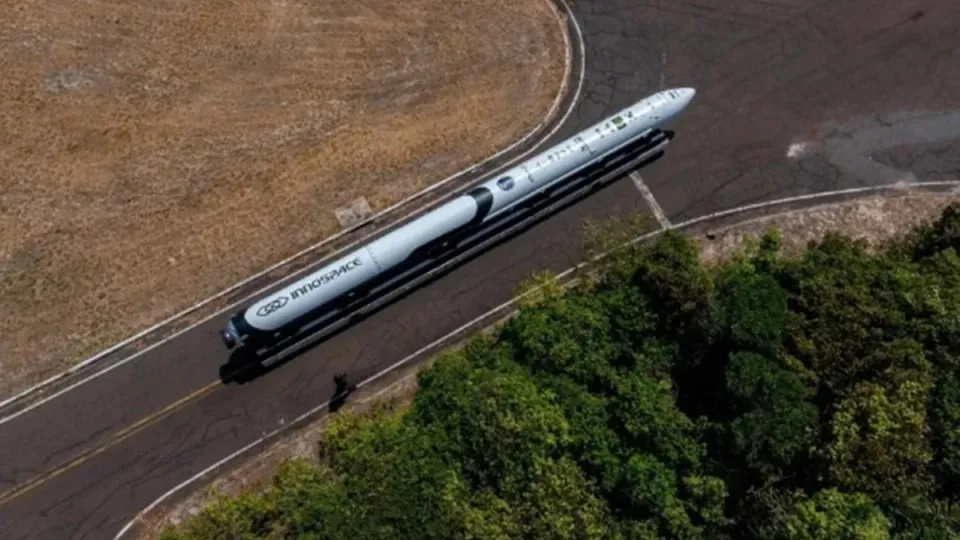
Approximately 35 seconds after takeoff, the Brazilian Air Force (FAB) activated the Flight Termination System, a mechanism used to interrupt a mission when the vehicle leaves the planned route. After the interruption, SEBIT fell into the sea, within a previously determined safety zone.
- There were no reports of injuries or damage to launch center facilities.
- Company will investigate cause of deviation Innospace, the South Korean company responsible for the rocket, reported that the data obtained during the mission will be analyzed to determine...
Editorial reading aid based only on information contained in this story and its identified source.
The rocket left the platform normally at 4:30 pm, but an anomaly was identified during the flight. Approximately 35 seconds after takeoff, the Brazilian Air Force (FAB) activated the Flight Termination System, a mechanism used to interrupt a mission when the vehicle leaves the planned route.
After the interruption, SEBIT fell into the sea, within a previously determined safety zone. There were no reports of injuries or damage to launch center facilities.
Company will investigate cause of deviation
Innospace, the South Korean company responsible for the rocket, reported that the data obtained during the mission will be analyzed to determine what caused the change in trajectory.
Even without completing the entire scheduled flight, the company managed to gather information from the propulsion, guidance, navigation, control and tracking systems.
According to the company, "the test provided valuable flight data from key systems."
The launch was carried out in cooperation with Alada, a Brazilian state-owned company created to expand the commercial use of the country's aerospace infrastructure.
SEBIT made its first test flight
SEBIT is a multipurpose suborbital rocket developed by Innospace to test technologies and obtain information that could be used in future missions.
Before launching in Maranhão, the vehicle had completed a series of ground tests in South Korea. On August 3, the company performed an 83-second burnout of its hybrid engine, with a thrust of three tons, a stage considered the last major qualification before the inaugural flight.
This week's mission aimed to evaluate, in real conditions, engine performance, flight characteristics, guidance, navigation and control systems, in addition to safety procedures and ground operations.
Innospace maintains new launch for November
The problem with SEBIT has not, to date, changed Innospace's planning for another mission from Maranhão.
The company plans to launch a new attempt to launch the HANBIT-Nano, a vehicle intended for placing small satellites into orbit, for November. The operation should also start from the Alcântara Launch Center.
Innospace informed that it will continue to analyze the data collected on the SEBIT flight to identify the origin of the anomaly and improve the reliability of future missions.
NASA reveals crater on the Moon after abandoned SpaceX rocket crash
Images captured by the Lunar Reconnaissance Orbiter show the mark left on the lunar surface by the upper stage of a Falcon 9 that crashed on August 5. According to NASA, the crater is about 18 meters wide and less than three meters deep.