An Iranian woman accused of turning successive relationships into a series of murders was sentenced to ten terms of qisas, a punishment provided for by Iranian legislation that, in cases of homicide, can result in execution. Kolthoum Akbari was held legally responsible for the deaths of 11 men over approximately two decades.
She married, killed and moved on: 11 husbands killed in 20 years
An Iranian woman accused of turning successive relationships into a series of murders was sentenced to ten terms of qisas, a punishment provided for by Iranian legislation that, in cases of homicide, can result in execution. Kolthoum...
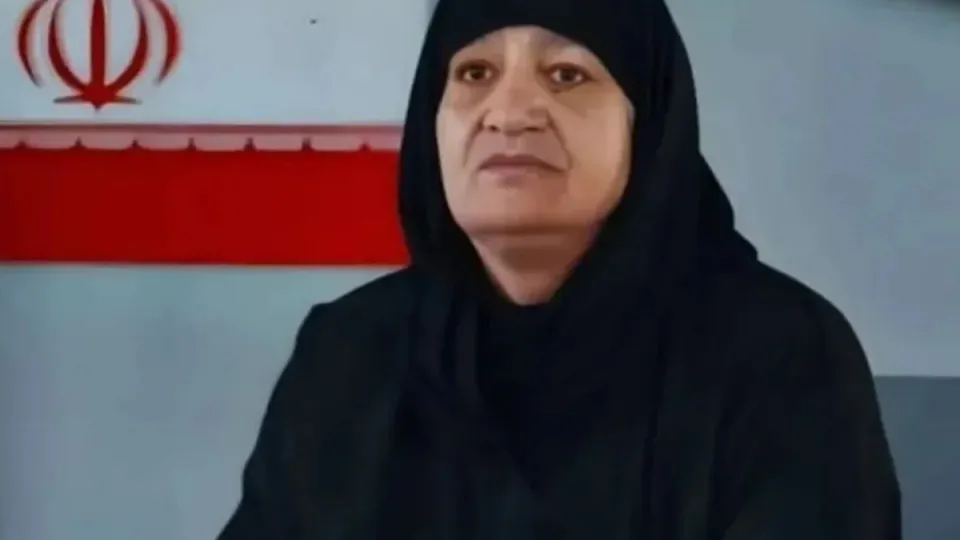
The difference between the number of deaths and the number of sentences sentenced to the maximum sentence occurs because ten of the victims' families demanded qisas. Another man's relatives agreed to waive this punishment by paying diya, financial compensation also provided for in Iranian law.
- Akbari also received ten years in prison for attempted murder.
- The case only came to light in 2023, after years of deaths that had not been related to each other.
Editorial reading aid based only on information contained in this story and its identified source.
The difference between the number of deaths and the number of sentences sentenced to the maximum sentence occurs because ten of the victims' families demanded qisas. Another man's relatives agreed to waive this punishment by paying diya, financial compensation also provided for in Iranian law. Akbari also received ten years in prison for attempted murder.
The case only came to light in 2023, after years of deaths that had not been related to each other. The investigation began to advance when suspicions arose around one of the last men Akbari had a relationship with, an 82-year-old man. She was arrested in September of that year.
Deaths were treated as isolated cases
According to investigations, Akbari had relationships mainly with older men and, on different occasions, entered into temporary marriages with them, a modality known in Iran as sigheh. Relationships could involve the payment of dowries and other values.
The victims lived in different cities in the province of Mazandaran, in the north of the country. This dispersion contributed to deaths being treated for years as unrelated episodes. Many of the men were also elderly and had health problems, which made it difficult to raise immediate suspicions.
According to the lawsuit, Akbari used medication and other substances to weaken his victims before the murders. In some cases, men were suffocated.
During the investigations, the Iranian herself gave different versions about the number of victims. In a statement reproduced by the press, he stated: "I don't know how many I killed. I don't remember exactly. I drugged them and then used a towel."
The judicial process, however, records 11 homicides, one attempted homicide and two other deaths considered suspicious, but which were not proven to be crimes committed by her.
Man who survived helped reveal the case
One of the important pieces of the investigation was the report of a man who survived after having a relationship with Akbari.
According to his lawyer, the elderly man noticed that a drink prepared by his wife had a strange taste. Shortly after, he began to feel ill and became suspicious of her behavior. The man managed to react when Akbari tried to suffocate him and was later taken to hospital. The episode was only investigated in greater depth after the other crimes came to light.
After Akbari's arrest, investigators reviewed previous deaths and found similarities between the cases. Reconstructions of the crimes were also carried out during the process.
Money appears as a possible motivation
Part of the investigations pointed to a possible financial motivation. The relationships involved dowries, money and other assets, and authorities investigated whether the woman chose men with assets before starting the relationship.
The defense, however, contested this interpretation. One of Akbari's lawyers told the Iranian press that there was no proof that properties had been transferred to her name and claimed that the client had psychiatric problems. The medico-legal expert, according to the same report, did not recognize the insanity thesis presented by the defense.
The case brought together more than 60 family members and others involved, including the complainants and representatives of the victims, according to one of the lawyers who is following the process.
Conviction provides ten qisas sentences
The Mazandaran provincial court sentenced Akbari to ten independent terms of qisas for the murders and ten years in prison for the attempt to kill another man. The decision was publicly confirmed by the Iranian Judiciary spokesman.
In the Iranian system, relatives of homicide victims can demand the application of qisas or, in certain situations, pardon the convicted person and accept financial compensation.
Parents travel 100 km without realizing their son was dead in the car
The couple believed that their 31-year-old son was sleeping while traveling on the A21 highway, in northern Italy. When he stopped the car and tried to wake him up, his parents realized that he was unresponsive. The cause of death is yet to be clarified