Four years at university may be too long given the speed at which the world and the job market are changing. The assessment is by Sam Altman, co-founder and CEO of OpenAI, the company responsible for ChatGPT.
Sam Altman says four years of college might be too long
Four years at university may be too long given the speed at which the world and the job market are changing. The assessment is by Sam Altman, co-founder and CEO of OpenAI, the company responsible for ChatGPT. During the Internapalooza...
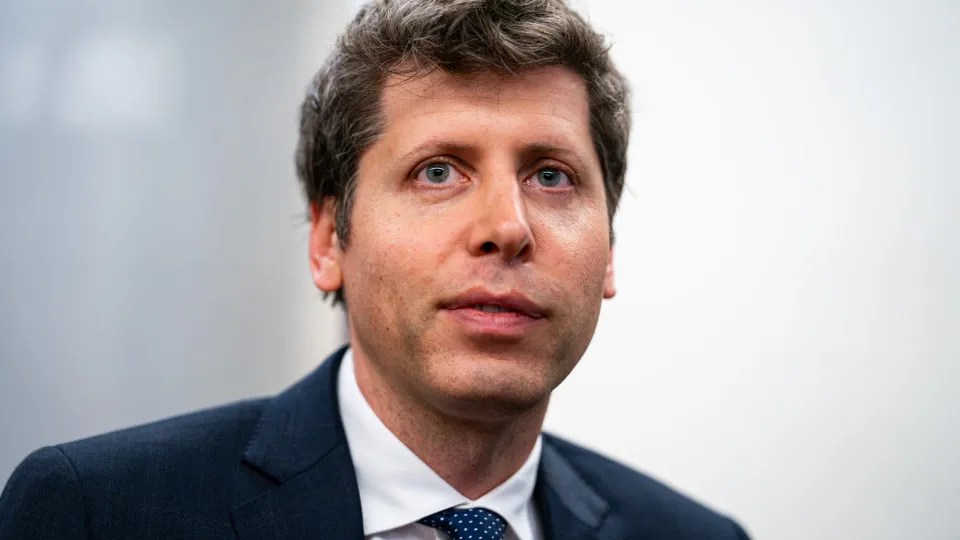
The businessman spent around two years at Stanford University before abandoning the course in 2005 to dedicate himself to technology projects. According to him, that period was enough for his personal experience.
- Altman stated that two years was "the right amount of time" for him and assessed that staying longer at the university would have provided a much smaller return.
- This does not mean, however, that the executive considers higher education to be useless.
Editorial reading aid based only on information contained in this story and its identified source.
During the Internapalooza technology conference, Altman used his own experience to argue that the necessary period of academic training can vary according to each person's trajectory.
The businessman spent around two years at Stanford University before abandoning the course in 2005 to dedicate himself to technology projects. According to him, that period was enough for his personal experience.
Altman stated that two years was "the right amount of time" for him and assessed that staying longer at the university would have provided a much smaller return.
This does not mean, however, that the executive considers higher education to be useless.
"I think that, with the way the world has evolved, you shouldn't spend so much time at university, but it was still good to meet people, live alone and work on projects," he declared.
Altman sees benefits to the college experience
When talking about Stanford, the businessman highlighted that he learned a lot during his time at the institution. The experience, according to him, was also valuable for aspects that go beyond classes, such as the possibility of meeting people, gaining independence and developing projects.
Altman's criticism is mainly directed at the traditional duration of courses and the return obtained after a certain period of training.
After leaving Stanford, he participated in the creation of Loopt, a location-sharing application that received support from the accelerator Y Combinator. The experience helped Altman expand his work in the technology and investment sector before participating in the creation of OpenAI.
Today, he holds the position of CEO of the company.
Advancing AI also requires time to adapt, says Altman
The speed of transformations caused by artificial intelligence has also frequently appeared in the executive's recent statements.
In an appearance on the Invest Like the Best podcast, Altman admitted the possibility of it being necessary to slow down the pace of technology development to allow society time to adapt to the new capabilities of AI systems.
“We may have to slow down the pace of development of Artificial Intelligence to have enough time, as a society, to adapt to some of these new levels of capacity,” he said.
Concern about the adaptation capacity of institutions and society also appears in discussions promoted by OpenAI itself. At a company event in 2026, Altman was asked directly about how long governments, institutions and society will have to keep up with technological acceleration.
The possibility of slowing down represents a change in tone compared to the businessman's previous statements.
Months earlier, during BlackRock's US Infrastructure Summit, Altman had argued that the United States needed to move quickly in the adoption of artificial intelligence to preserve its economic and technological position compared to other countries.
At the time, he argued that the United States' ability to maintain its advantage would depend on the speed with which companies, scientists and the government itself incorporated new tools.
OpenAI continues to advocate for expanding access to artificial intelligence and developing the technology as tools to increase productivity, accelerate scientific discoveries and create new economic opportunities. At the same time, the company states that institutions and society need to keep up with the transformations caused by AI.
Cell phone gets too hot when charging? See adjustment that can solve
Some Galaxy phones allow you to turn off fast charging in the battery settings. The change increases the time needed to complete the charge, but may be useful for those who notice frequent heating during the process.