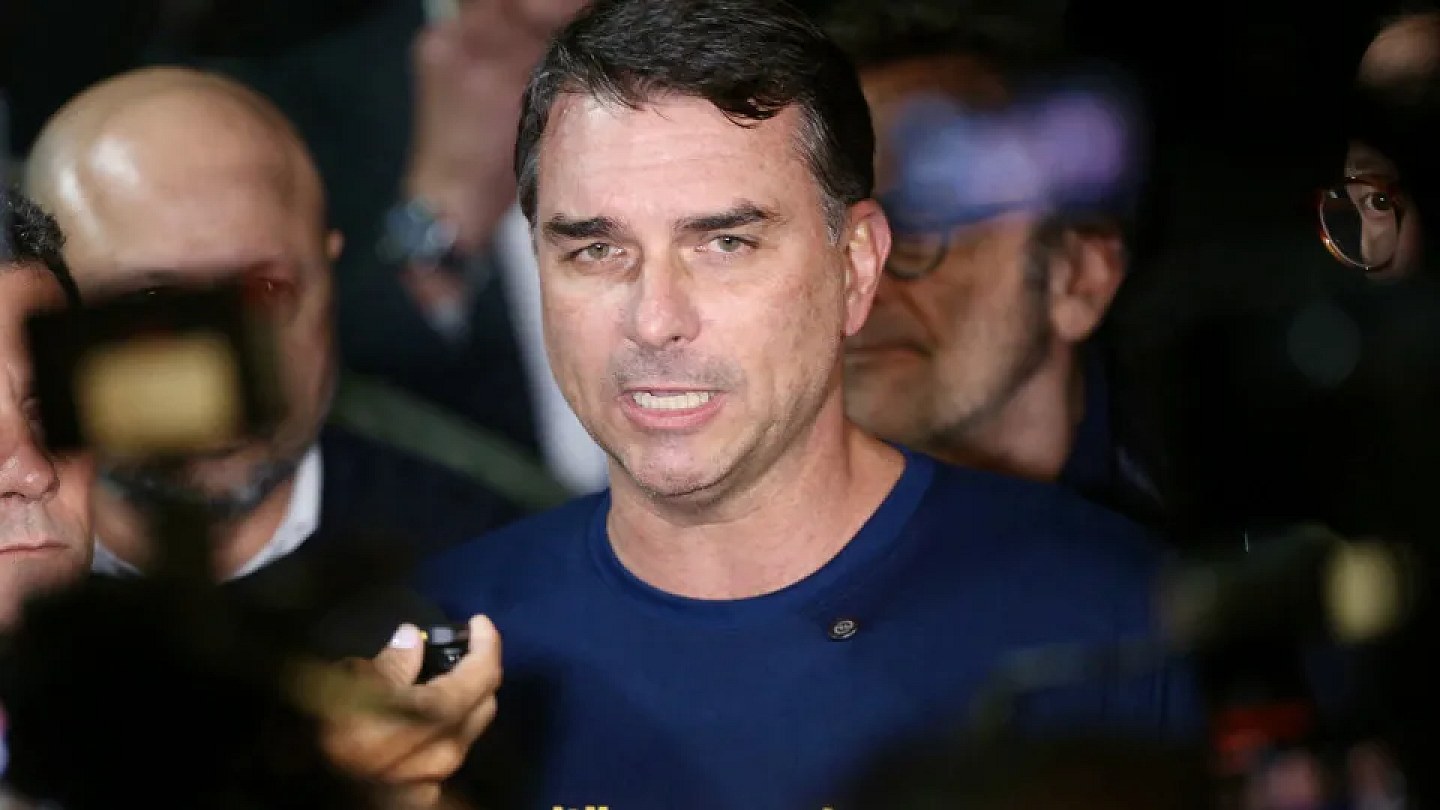
AUGUSTO TENÓRIOBRASÍLIA, DF (FOLHAPRESS) - Senator and presidential candidate Flávio Bolsonaro (PL-RJ) focused his parliamentary amendments on public security and national defense actions, shows a survey of the report with data from the transparency platform Siga Brasil. The presidential candidate ignored or allocated few resources to areas such as housing and agriculture. Health received only 1% of his amendments.
Flávio Bolsonaro focused amendments on security and defense and left science and agriculture out
AUGUSTO TENÓRIOBRASÍLIA, DF (FOLHAPRESS) - Senator and presidential candidate Flávio Bolsonaro (PL-RJ) focused his parliamentary amendments on public security and national defense actions, shows a survey of the report...
The survey takes into account the amount that the senator allocated for amendments to a certain area, respecting the legal obligation to send at least 50% to health. The list does not take into account how much of the transfers were actually paid, because this depends on the government's pace.
Flávio was elected senator in 2018 and took office in 2019. Therefore, he only made nominations starting with the 2020 Budget. Since then, he has indicated R$364 million in parliamentary amendments, in amounts adjusted for inflation.
Of this total, 21.8% (R$79.5 million) went to national defense and 19.4% (R$70.9 million) to public security.
These numbers make Flávio Bolsonaro the senator who allocated the most amendments to national defense, and the second who allocated the most funds to public security. Second only to Marcos do Val (Avante-ES).
For health, the presidential candidate applied almost the minimum, allocating 50.8% (R$ 185.5 million) of his amendments to this area, just 0.8% above the legal obligation. The senator also allocated 1.4% of the total amount (R$5.2 million) for special charges, an action that includes debt refinancing, payment of compensation and interest from public authorities.
For education, Flávio allocated 0.8% (R$ 2.9 million) of his amendments. For sports and leisure, it was 3.1% (R$11.5 million), while for social assistance it was 1.67% (R$6 million).
These numbers make Flávio Bolsonaro 56th in the ranking of investment in education amendments among senators. In total, 117 senators nominated amendments from 2020 to 2026, but some of them were substitutes and took office for a short period of time or were not re-elected in 2022.
The parliamentarian did not send amendments to areas such as housing, transport, science and technology, culture, energy and agriculture.
According to Siga Brasil, 78 of the 117 congressmen who passed through the Senate and indicated amendments since 2019 invested in agriculture.
Despite being part of the minority that stopped suggesting projects and actions in the area, the PL candidate is committed to a pro-agribusiness speech. In June, he went to a fair in Bahia and accused the Lula government of persecuting the sector: "You carry this Brazil on your shoulders and you don't deserve to have a president who treats agriculture as if you were fascists."
The Senate has 81 members, and in 2022 there were elections for a third of the seats. Furthermore, some substitutes took over the mandate and even signed transfers, such as Augusta Brito (PT-CE), who replaced former minister Camilo Santana (PT-CE). Thus, the survey identified 117 authors of amendments since 2019, a number greater than the seats in the House.
All R$364 million in Flávio Bolsonaro's amendments were authorized in the federal government's Budget. Of this total, R$245 million was paid and another R$75 million was committed and awaiting payment.
During the term, it is possible to reallocate amendments to projects to which the parliamentarian already planned to send money. In this way, areas with low initial allocations may end up receiving resources if, throughout the term, a congressman changes his mind.
In this way, Flávio managed to send R$21.7 million for special charges, despite having initially only planned to indicate R$5.2 million for this area. For public security, the senator managed to pay 53% (R$42.3 million) of the R$79.5 million planned.
When contacted, the senator stated that he directs his parliamentary amendments primarily to municipalities and regions in the most precarious situation, which, according to him, face difficulties arising from poor management and the lack of efficiency of the federal government. "The flags defended by the senator's mandate, such as health and safety, are also prioritized", he stated in a note.
FOCUS ON SECURITY AND DEFENSE
Public security is treated by Flávio Bolsonaro as one of the crucial points of his campaign for the Presidency of the Republic. The senator even advanced his proposals for this sector by advancing part of his government plan.
At the same time, the senator has not indicated detailed proposals for education or other areas that received little or no attention in the distribution of his amendments.
Flávio Bolsonaro's security transfers were made to finance programs related to combating organized crime, violence and corruption, in addition to citizenship actions.
The majority of the amendments, R$32.5 million, went to national actions. For the state of Rio de Janeiro, he allocated R$26.2 million. Only two municipalities were covered by the senator with security transfers: the capital, with R$10.8 million, and São Gonçalo, with R$1.3 million.
The defense amendments focus on the "structuring and modernization of health units of the Armed Forces", the administration of military units and "the adequacy of infrastructure assets of military organizations", as Siga Brasil describes.
As Folha de S. Paulo showed, Flávio is the author or co-author in the Senate of 57 bills and 92 PECs (proposed amendments to the Constitution), the majority dealing with public security. But, in more than seven years in the House, only two proposals in which he was a co-author came into force, without any link to security: a constitutional amendment to exempt IPVA from vehicles over 20 years old and a law to promote microcredit.
Source: Noticias ao Minuto
Next recommended read
This story was originally published by Noticias ao Minuto. Visit the original publication for further details.
Open original publication

