(FOLHAPRESS) Pressured by the National Congress, the TCU (Federal Audit Court) can pave the way for a change in the way the constitutional ceiling on bonuses paid to civil servants who occupy management and leadership positions in the Legislature and in the Audit Court itself is applied.
Congress pressures, and TCU must release pendants outside the ceiling and set a precedent
(FOLHAPRESS) Pressured by the National Congress, the TCU (Federal Audit Court) can pave the way for a change in the way the constitutional ceiling on bonuses paid to civil servants who occupy management and leadership...
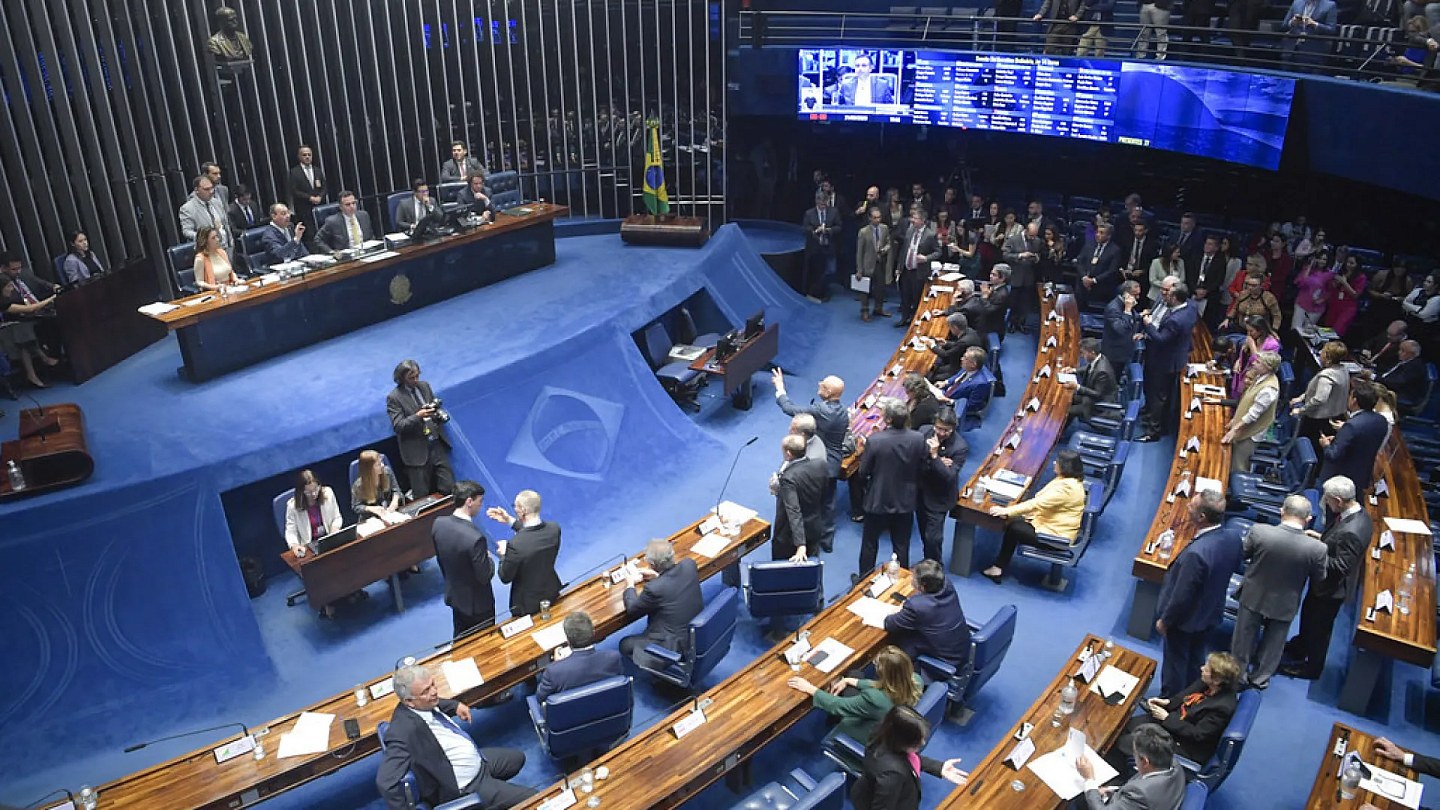

The Lula government is following the case with concern, because a favorable decision could allow the creation of a new type of pendant.
The case is scheduled for judgment by the plenary this Wednesday (15) and its rapporteur is Minister Walton Alencar Rodrigues. The discussion reached the court through a representation presented by Sindilegis, a union that represents employees of the Chamber of Deputies, the Senate and the TCU.
In the action, the entity maintains that the current system causes a distortion: employees begin to perform management and leadership functions without receiving effective financial compensation, since the additional remuneration is neutralized by the ceiling.
According to the union, this situation discourages the occupation of strategic positions and compromises the efficiency of public bodies.
Penduricalho is the name given to extra amounts paid to public servants in addition to the base salary, increasing the monthly remuneration.
The entity argues that payments arising from trust functions receive different treatment in the application of the constitutional ceiling, as they correspond to the exercise of additional duties.
Folha found that the president of the Senate, Davi Alcolumbre (União Brasil-AP), sought, in recent weeks, ministers of the Court with political indications to defend a change in the understanding currently adopted by the court.
The judgment may have relevant effects on the remuneration of employees who occupy positions of trust.
Today, the consolidated understanding of the TCU is that the bonus for holding management positions is part of the employee's total remuneration and, therefore, must be subject to the constitutional ceiling.
In practice, employees who already receive amounts close to the limit take on more responsible roles without receiving the full bonus, because part of the payment is absorbed by the so-called ceiling reduction.
The Lula government's economic team fears that a TCU decision will set a precedent for other public service careers.
A high-ranking technician from the court opposed to the measure stated that it is noteworthy that the Court, responsible for external control of public accounts, has already issued several warnings about fiscal policy.
The technical area of the TCU recommended archiving the representation. In the opinion sent to the rapporteur, the technicians state that the union does not have the legitimacy to use this type of procedural instrument.
They also maintain that the jurisprudence of the court itself and the STF (Supreme Federal Court) is peaceful in the sense that job bonuses are part of the remuneration subject to the constitutional ceiling.
Despite the demonstration, the tendency is for the rapporteur to be defeated in the plenary, according to Folha. Walton Alencar Rodrigues discussed the process twice in recent months, but withdrew it from the vote on both occasions.
The possibility of the minister removing the case from the agenda again due to political pressure has not been ruled out. This Wednesday, the tendency is for him to understand that it is not up to the TCU to analyze the process.
The trial takes place a few months after a decision by Minister Flávio Dino, of the STF, which reorganized the treatment of funds paid to the judiciary and the Public Ministry.
In March, the Supreme Court established a thesis to regulate compensation funds for these careers and established a transition rule until Congress approves national legislation on the subject.
At the time, the STF authorized, within the defined parameters, the payment of certain installments outside the salary ceiling to magistrates and members of the Public Ministry. The decision, however, made it clear that the thesis does not apply to other public service careers.
It was precisely this understanding that reignited the debate between Congress and TCU employees. The argument is that, while judges and members of the Public Ministry now have a specific regime for certain funds, Legislative employees continue to be subject to the traditional interpretation of the ceiling.
The opinion of the TCU's technical area dedicates a significant part of its reasoning to the STF's decision.
Although they recognize that there has been a change in the legal scenario for magistrates and members of the Public Ministry, the technicians state that the Supreme Court's thesis does not solve the structural problem of the salary cap and cannot be automatically extended to other public servants.
The technical unit concludes that a possible solution depends on legislative changes, and not on a new interpretation of the constitutional ceiling by the TCU.
The risk of the court giving the green light to the payment of bonuses outside the ceiling reached the Supreme Court. Some ministers involved in this discussion consider that the measure would represent a step backwards and would harm the debates on frills and compliance with the salary limit.
When contacted, the president of the Senate did not respond to the report's questions.
The president of the TCU, Vital do Rêgo, had already created a compensation fund for Court technicians who occupy leadership positions, signaling support for the payment of bonuses.
In an interview with C-Level, Folha's videocast, in June, he defended the adoption of the measure through an ordinance and stated that the initiative does not contradict the Supreme Court's decision.
"How much do you think the CEO of a large company or the head of a medical service in the Federal District earns? Do you know how much the public service ceiling would be for a specialist, like the CEO of a private company? R$ 72 thousand, applying inflation throughout this time, since it was created. The vast majority of TCU auditors are already at the current ceiling", said Vital do Rêgo.
Moraes and Dino give TJs 2 days to explain violation of STF order on pendants
Ministers demanded that courts in seven states report payments made in non-compliance with the STF's decision that prohibited pendulous payments above the limit of 70% of the ceiling, and threatened to depose presidents who did not provide information or violated the rules
Source:
Noticias ao Minuto - Politica


