PEDRO S. TEIXEIRASÃO PAULO, SP (FOLHAPRESS) - The government changed the Pbia (Brazilian Artificial Intelligence Plan) and should purchase two supercomputers among the ten most powerful in the world, one from the United States and one from China, instead of a single piece of equipment.
Lula changes plans and must spend R$2 billion on two AI supercomputers, one American and one Chinese
PEDRO S. TEIXEIRASÃO PAULO, SP (FOLHAPRESS) - The government changed the Pbia (Brazilian Artificial Intelligence Plan) and should purchase two supercomputers among the ten most powerful in the world, one from the United States and one from...
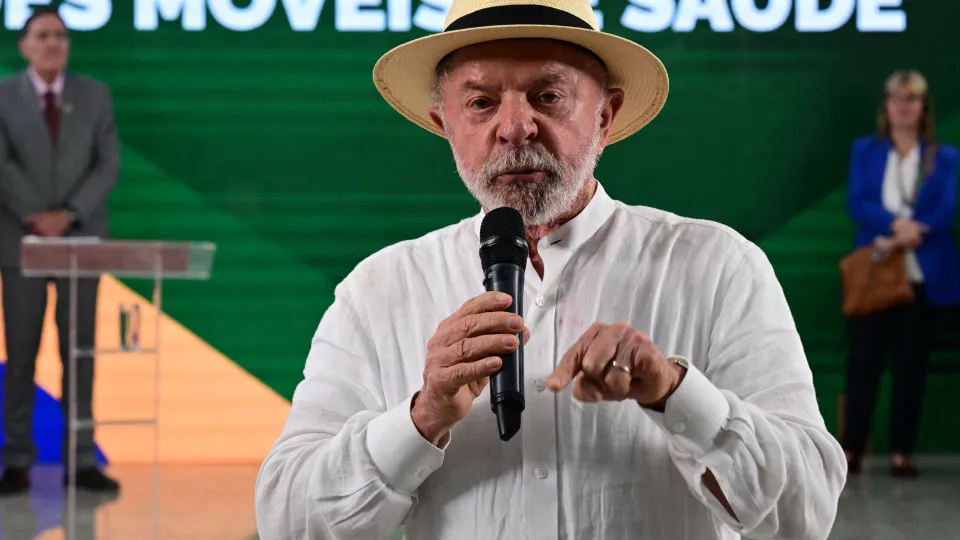
The machine is seen as a key point in the Brazilian strategy for artificial intelligence and should be used in the development of its own technology, such as natively Brazilian artificial intelligence models, from the government or the private sector. The announcement follows a meeting between President Luiz Inácio Lula da Silva (PT) with five experts in...
- The announcement follows a meeting between President Luiz Inácio Lula da Silva (PT) with five experts in the field, including Mat Velloso, a former Brazilian Google executive who called...
- The president said at a press conference this Tuesday (11) that Brazil is not ready to compete technologically with either the Americans or the Chinese.
- The main supercomputer will have an installed power determined by notice of 9.2 megawatts, which would place the equipment in sixth position in the Top500 specialized ranking and would...
Editorial reading aid based only on information contained in this story and its identified source.
The equipment will cost more than R$2 billion, and tenders should be published in the next few days, said the Minister of Science, Technology and Innovation, Luciana Santos, in an interview with Folha this Wednesday (12).
The machine is seen as a key point in the Brazilian strategy for artificial intelligence and should be used in the development of its own technology, such as natively Brazilian artificial intelligence models, from the government or the private sector.
The announcement follows a meeting between President Luiz Inácio Lula da Silva (PT) with five experts in the field, including Mat Velloso, a former Brazilian Google executive who called China a reference.
The president said at a press conference this Tuesday (11) that Brazil is not ready to compete technologically with either the Americans or the Chinese. He says he wants both countries "with us".
The main supercomputer will have an installed power determined by notice of 9.2 megawatts, which would place the equipment in sixth position in the Top500 specialized ranking and would represent an electrical consumption equivalent to that of around 45 thousand homes. "Each machine will perform several quadrillion mathematical operations per second," said the minister.
The specifications of the equipment were decided by the LNCC (National Scientific Computing Laboratory), installed in Petrópolis, in the interior of Rio de Janeiro, which was the original destination of the supercomputer.
Due to electrical demand, the government gave up installing the equipment in the laboratory, and President Lula must choose between three locations: the capital of Rio de Janeiro, a point in Rio Grande do Norte or the São Paulo city of Campinas.
"Our tendency is to choose a place in the Southeast and another in the Northeast, depending on confronting regional inequality," said Santos. Lula should bang the hammer on the location in a meeting before the publication of the notice. "This will be decided by the Executive because [otherwise] it would delay the execution of the purchase and time is pressing. Research on molecules, for example, takes up to five years and we can reduce this to weeks with the supercomputer", stated the minister.
The notice to purchase supercomputers will have three phases in a design focused on building Brazilian digital sovereignty. "We want to diversify the route so as not to depend exclusively on a certain country", said the head of the Science and Technology department.
The first route will be the acquisition of equipment among the ten most powerful in the world, without restrictions. The minister estimates that the supplier will be Nvidia, based in the USA. The second will involve a technological order with developing countries, with China being the only one able to supply the equipment.
The third will be investment in a processor model developed collectively under the coordination of the Risc-V International organization, whose headquarters are in Switzerland.
According to the minister, the discussion about the search for alternative suppliers was already underway, but was consolidated during Brazil's accession to Waico (World Organization for Cooperation in Artificial Intelligence), an intergovernmental entity whose creation was announced in a speech by Chinese President Xi Jinping last month.
"It's a strategic alliance. We carry out international cooperation, and sovereignty is not an exclusion of transfer or cooperation. Quite the contrary, we will only achieve sovereignty if we drink from those who have more advanced technologies, but always from the perspective of national interest", stated Santos.
For her, the partnership, which unites 29 countries more aligned with China, is strategic for Brazil because it involves nations at a similar stage of development. "We can better understand the technology's learning curve. And those who master the technology much further ahead can restrict transfer."
The minister acknowledged that the government will have to deal with "uncertainties and risks" when purchasing supercomputers. "The United States threatens to cease supplies to anyone doing business in these most critical areas with China." She considers that American companies are also interested in selling their products to Brazil, considering that it is a purchase worth more than R$1 billion. "I don't know to what extent what is proclaimed will happen in practice, because it is an objective interest."
The machines, in compliance with Pbia guidelines, must be used to train large Brazilian language models (such as ChatGPT and Claude). The equipment will be available to governments, universities and companies, in a model of cooperation agreements similar to that of the National Center for Research in Energy and Materials (CNPEM).
"Today, Sabiá, which is a model from the company Maritaca.AI, is private, but Soberania is from the state of Piauí and is also quite advanced, it is considered one of the most powerful models, precisely because it gathers government data", stated Santos.
The agreements will also have technology transfer clauses linked to the development of AI in both software (computer programs) and hardware (construction of parts).
According to the minister, the government has already implemented R$14.2 billion of the R$23 billion budget announced at the launch in 2023 of Pbia, a plan made in partnership with 117 institutions, including universities, companies and civil society entities.
The government, says the minister, has already delivered 20 high-performance Intel computers to universities and is adapting five of the National High Performance Processing Centers (Cenapad) to work with artificial intelligence.
The government also invested in an update to Santos Dumont, installed at LNCC, in Petrópolis, the current most powerful supercomputer in the country. "He was and