SÃO PAULO, SP (FOLHAPRESS) - The dollar opened lower this Thursday (6), while investors reflected on the interest rate decision of the Copom (Monetary Policy Committee) of the BC (Central Bank).
Dollar opens falling and Stock Exchange retreats after Copom’s decision on Selic
SÃO PAULO, SP (FOLHAPRESS) - The dollar opened lower this Thursday (6), while investors reflected on the interest rate decision of the Copom (Monetary Policy Committee) of the BC (Central Bank). At 10:44 am, the US...
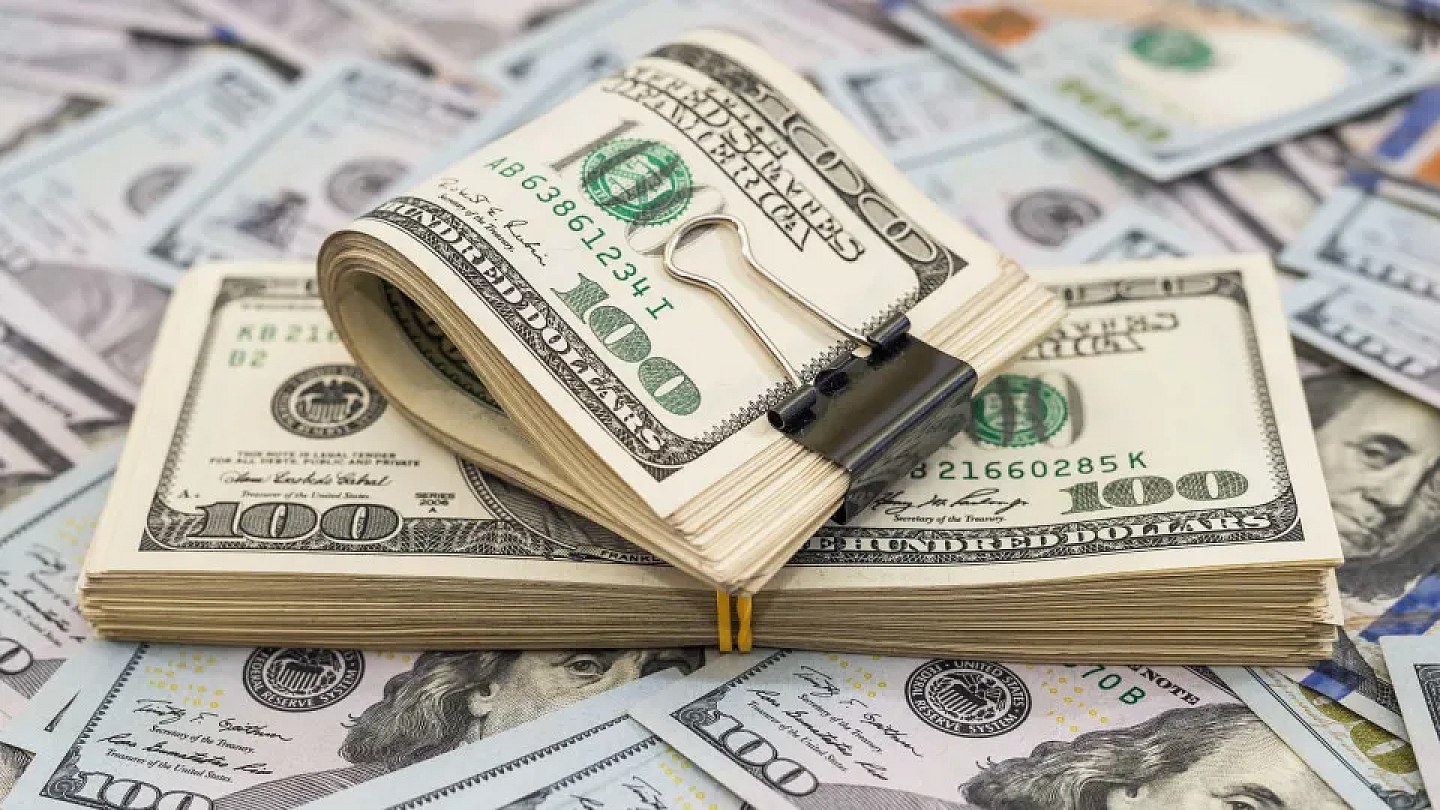
At 10:44 am, the US currency fell 0.62%, quoted at R$5.098. At the same time, the Ibovespa fell 0.42%, to 176,740 points.
On Wednesday (5), the Copom reduced the basic interest rate by 0.25 percentage points, to 14% per year, in the fourth consecutive cut in the Selic. The decision was already widely expected by economists.
In the statement released with the decision, the panel did not anticipate the next steps of monetary policy and once again stated that the total size of the cycle will be established "in light of new information", given the risks associated with the trajectory of prices. "The committee will continue to monitor the evolution of the scenario in order to maintain the appropriate restriction to ensure the convergence of inflation to the target", he stated.
According to Otávio Araújo, senior consultant at ZERO Markets Brasil, the combination between the BC's cautious stance, the uncertainties surrounding inflation and geopolitical developments in the Middle East tends to keep the market in waiting mode, with investors paying attention to both corporate balance sheets and global signals about risk and monetary policy.
For Araújo, the neutral tone of the BC statement rules out immediate surprises, but increases the market's sensitivity to the release of indicators that can anticipate the trajectory of prices and economic growth, which tends to increase intraday volatility.
Among the highlights that could move the Stock Exchange this Thursday are Bradesco's balance sheet, which recorded recurring net profit of R$7.1 billion in the second quarter, an increase of 16.2% compared to the same period in 2025, and Petrobras' results, expected after the market closes.
David Beker, head of economics for Brazil and strategy for Latin America at BofA (Bank of America), says that, after the Copom's decision, the bank maintained the expectation of another cut of 0.25 percentage points at the September meeting, followed by an extended pause.
According to the economist, the Copom slightly changed its tone in relation to the domestic scenario. While, in the previous statement, economic activity was described as "accelerating", it has now been characterized as "gradually slowing down, with mixed signals". The job market continued to be considered strong, at the same time that the BC recognized the improvement in recent inflation indicators.
In the external scenario, Beker highlighted that the statement maintained the reference to the uncertainties caused by the war and added a mention to the uncertainty regarding the monetary policy of developed economies.
For Gustavo Sung, chief economist at Suno Research, the statement was clearer than that of the previous meeting and should not generate the same confusion seen in the last decision.
"I believe that this statement is more tied up. Without forward guidance [a monetary policy tool in which a central bank publicly communicates its intentions regarding the future direction of interest rates], I also think it is an important point, given the level of uncertainty about the basic scenario", says the expert.
According to Sung, the BC's decision document also reinforces that there are still several risks to inflation, such as the unanchoring of expectations, the conflict in the Middle East and climate issues (with El Niño) - which could affect food prices and measures to encourage economic activity.
On Wall Street, the main stock exchanges opened without a single direction, repeating the previous day's performance. On Wednesday, the S&P 500 fell 0.17%, the Dow Jones rose 0.49% and the Nasdaq fell 0.83%.
At 10:51 am, the S&P 500 and Nasdaq advanced 0.08% and 0.23%, respectively, while the Dow Jones recorded a drop of 0.05%.
Investors are still reflecting on corporate balance sheets and data released the day before, which showed a slowdown in job creation by the United States private sector in July.
The North American private sector added 44,000 jobs last month, after 95,000 in June, in data revised downwards. Economists consulted by Reuters predicted the opening of 70,000 jobs, after the 98,000 initially reported for June.
On the international scene, investors continue to follow developments in the conflict between the United States and Iran.
Iran and Oman have proposed an agreement to end the war in the Middle East, but there has been no US comment on the proposal. At the same time, Iran warned Persian Gulf countries that any new US attack on their territory would trigger retaliation against essential energy infrastructure across the region, according to five sources interviewed by Reuters.
On Monday (3), US President Donald Trump stated that talks between Washington and Tehran "are taking place". The statement was reinforced on Tuesday (4) by the United States Treasury Secretary, Scott Bessent.
At 10:55 am, a barrel of Brent oil rose 1.61%, quoted at US$80.73.
Future interest rates opened higher this Thursday (6). At 10:57 am, the DI for January 2028 increased to 13.855%, an increase of 0.06 percentage points. At the long end of the curve, the DI for January 2035 rose to 14.410%, an increase of 0.09 percentage points.
Source: Noticias ao Minuto
Next recommended read
This story was originally published by Noticias ao Minuto. Visit the original publication for further details.
Open original publication

