The current Ebola outbreak in the Democratic Republic of Congo has reached a worrying new level. Data released by Congolese health authorities show that 2,325 people died and 4,945 were confirmed infected, numbers that make the epidemic the deadliest ever faced by the country.
Ebola kills 2,300 in Congo and outbreak becomes 2nd deadliest in history
The current Ebola outbreak in the Democratic Republic of Congo has reached a worrying new level. Data released by Congolese health authorities show that 2,325 people died and 4,945 were confirmed infected, numbers that make the epidemic...
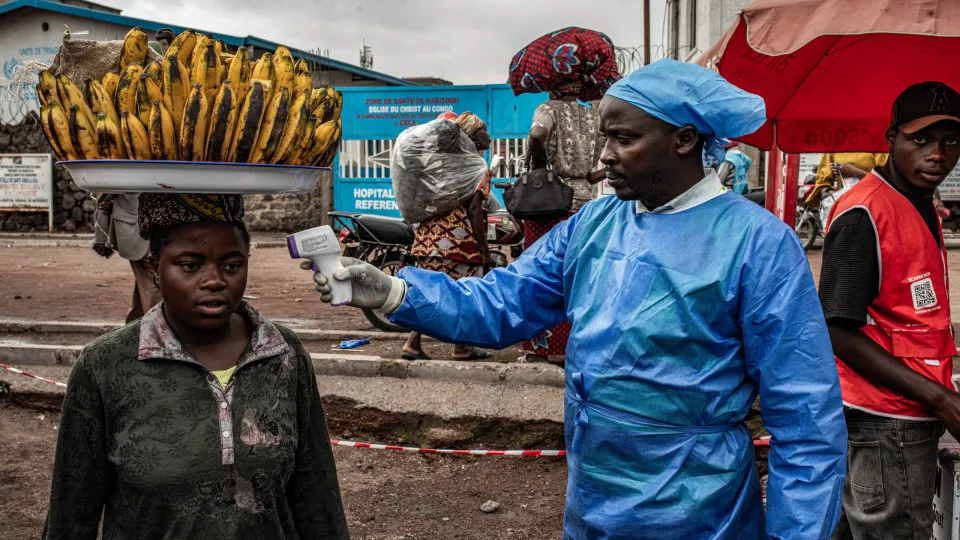
The number of fatalities is only lower than that recorded in the epidemic that mainly affected Guinea, Liberia and Sierra Leone between 2014 and 2016, when 28,616 cases and 11,310 deaths were recorded. The current dimension of the crisis has also surpassed the outbreak that occurred in eastern Congo between 2018 and 2020.
- Until then, it was considered the most serious Ebola epidemic ever recorded in the country.
- According to the Congolese National Institute of Public Health, just in the 24 hours prior to the release of the most recent data, another 101 cases of the disease were identified.
Editorial reading aid based only on information contained in this story and its identified source.
On the world stage, the outbreak that began this year is already the second deadliest in the history of Ebola. The number of fatalities is only lower than that recorded in the epidemic that mainly affected Guinea, Liberia and Sierra Leone between 2014 and 2016, when 28,616 cases and 11,310 deaths were recorded.
The current dimension of the crisis has also surpassed the outbreak that occurred in eastern Congo between 2018 and 2020. At that time, 2,299 people died. Until then, it was considered the most serious Ebola epidemic ever recorded in the country.
According to the Congolese National Institute of Public Health, just in the 24 hours prior to the release of the most recent data, another 101 cases of the disease were identified.
Ebola outbreak spread to six provinces
The current epidemic is the 17th recorded in the Democratic Republic of Congo since the Ebola virus was identified in 1976. The outbreak was officially declared by Congolese authorities on May 15, initially in the province of Ituri, in the northeast of the country.
Since then, the disease has advanced geographically. In an update published by the World Health Organization (WHO), with data up to August 12, there was already transmission in 54 health zones spread across six provinces: Ituri, North Kivu, South Kivu, Haut-Uélé, Tshopo and Bas-Uélé.
In that survey, the WHO recorded 4,665 confirmed cases and 2,184 deaths. The figures later released by the Congolese government, referring to August 16, raised the balance to 4,945 confirmed infections and 2,325 deaths.
The speed of transmission also worries authorities. Between August 3 and 9, the WHO recorded 579 new cases and 304 deaths, the highest weekly number since the beginning of the epidemic.
Lethality is close to 47%
Almost half of those with a confirmed diagnosis died. The crude fatality rate was 46.8% on August 12, according to the WHO. The most recent government data keeps the index close to 47%.
Reuters highlights that lethality was approximately 20% at the beginning of June and increased throughout the epidemic. Experts point out that growth does not necessarily mean that the virus has become more aggressive. The delay in identifying cases and initiating medical care is pointed out as one of the factors that may contribute to the high number of deaths.
The situation is worsened by the conditions faced in the region. The WHO cites insecurity, population displacement, intense movement between communities and neighboring countries and structural difficulties in the health system among the obstacles to containing transmission.
Virus variant does not have an approved vaccine
The outbreak is caused by the Bundibugyo virus, one of the species capable of causing Ebola disease in humans. Unlike the Zaire virus, responsible for other major epidemics and for which there are vaccines, there is still no approved vaccine or specific antiviral treatment for the Bundibugyo variant. Vaccine and therapeutic candidates are being evaluated.
The species was first identified in 2007, in the Bundibugyo district of Uganda. In that outbreak, 131 cases and 42 deaths were recorded, according to the WHO.
Given the progress observed this year, the World Health Organization declared, on May 17, that the outbreak in the Democratic Republic of Congo and Uganda constituted a Public Health Emergency of International Concern, the maximum level of alert provided for in the International Health Regulations.
How is Ebola transmitted?
Ebola is a serious disease that can be fatal. Transmission between people occurs through direct contact with blood and other body fluids from an infected person, living or dead, or through materials contaminated by these fluids. The virus does not spread through the air in the same way as respiratory illnesses.
Early symptoms may include fever, intense tiredness, muscle pain and headache. As the disease progresses, patients may experience vomiting, diarrhea and, in some cases, bleeding. Early care and supportive treatment, including hydration and symptom control, increase the chances of survival.
Although the number of deaths already places the 2026 epidemic as the second deadliest since Ebola was identified, it remains far below the tragedy recorded in West Africa between 2014 and 2016. The speed with which cases continue to emerge, however, keeps Congolese authorities and international organizations on alert.
Ebola advances in the Democratic Republic of Congo and already leaves 1,751 dead
The outbreak caused by the Bundibugyo variant has 3,874 confirmed cases and is progressing faster than previous epidemics. The WHO demands urgent reinforcement of the response, while conflicts, professional strikes and failures in tracking make control difficult