The PT pre-candidate for the government of São Paulo and former Minister of Finance Fernando Haddad stated this Wednesday, the 15th, that, if elected, he will carry out a "fine-toothed comb" in all concession contracts signed by the management of Tarcísio de Freitas (Republicans), who will run for re-election.
Haddad says that, if elected, he will go through a 'fine-toothed comb' over Tarcísio's contracts in SP
The PT pre-candidate for the government of São Paulo and former Minister of Finance Fernando Haddad stated this Wednesday, the 15th, that, if elected, he will carry out a "fine-toothed comb" in all concession contracts...
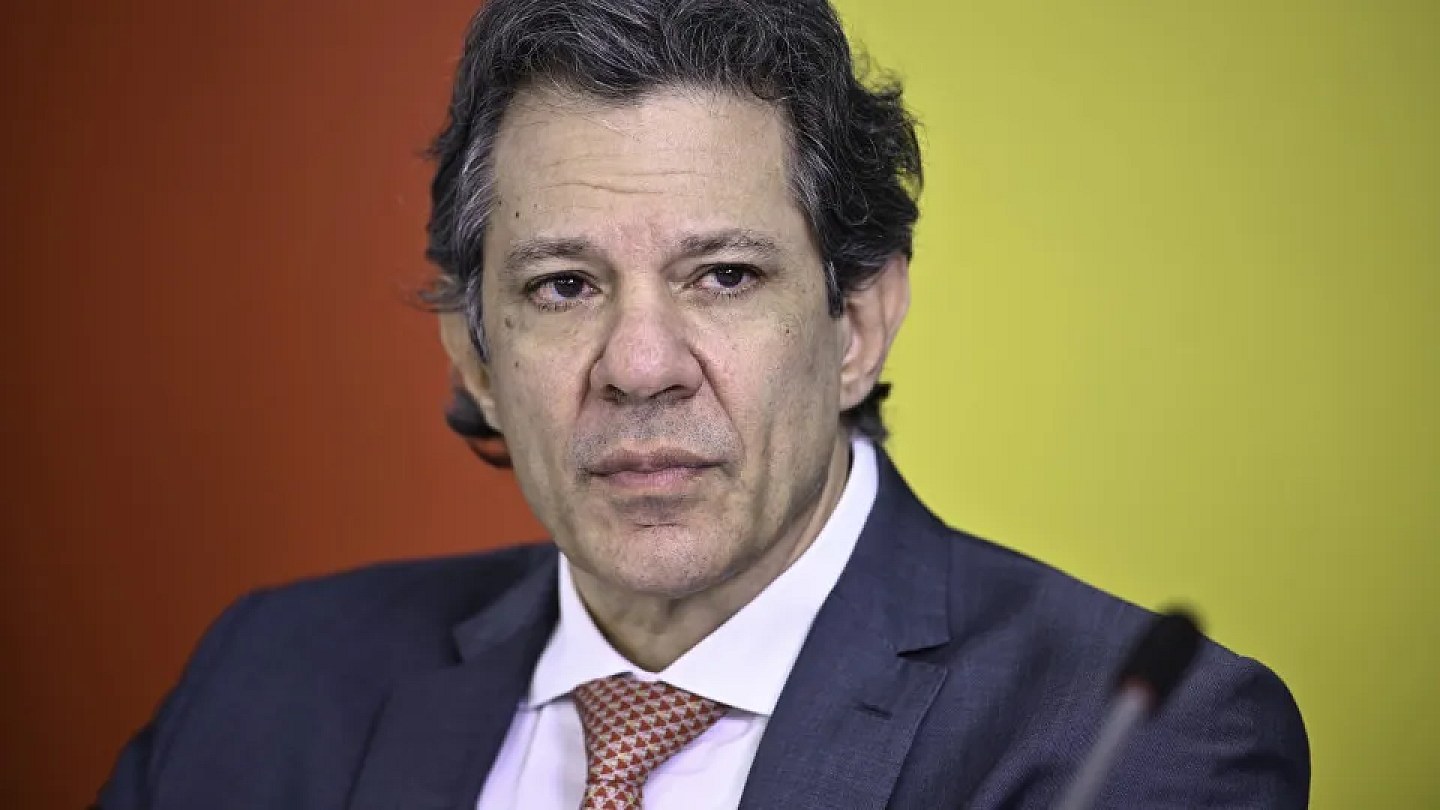
In an interview with the program Papo com Editor, on Broadcast Político, Haddad criticized the conduct of the privatization of the Companhia de Saneamento Básico do Estado de São Paulo (Sabesp), pointed out the existence of abusive clauses and said that the concessionaire has not been punished.
The privatization of Sabesp, completed in July 2024 for a total value of R$14.8 billion, was consolidated as the main axis of dispute and "war" of narratives in the electoral campaign for Palácio dos Bandeirantes. After the operation, the State remained with 18% of the company's capital, Equatorial acquired 15% and the other 67% was distributed among investors in the financial market.
The former Minister of Finance also criticized the current level of the basic interest rate and stated that the president of the Central Bank (BC), Gabriel Galípolo, has conducted monetary policy in a more "horse" way than he would like. Haddad said he would adopt the same direction, but with "another dose". Currently, Selic is at 14.25% per year, a level defined in June, after the start of the cutting cycle in March.
Below are the main excerpts from the interview:
Political Broadcast: One of the big debates of this election must be the privatization of Sabesp. You have already promised to review the contracts, although you rule out renationalization. What points do you want to revisit?
Fernando Haddad: In the federal government, we had to review all the railway concessions made by Tarcísio, with the monitoring of the Federal Audit Court, due to the damage caused to the treasury. They were poorly executed contracts, with financial losses for the Union. In São Paulo, there is no way not to review them either. I'm going to go through the contracts with a fine-toothed comb because there are abusive clauses and the concessionaire is not punished. You have reported the number of accidents caused by Sabesp, including some fatal ones. Sabesp continues to change water meters to increase profits, which are expected to triple in two years. How is this possible? Is it increased productivity or increased water bills? It's obvious that it's an increase in the water bill. The São Paulo industry does not complain publicly because the economic system, especially Faria Lima, is very close to Tarcísio. This is my disagreement with the lack of future vision for the São Paulo economy. São Paulo is losing traction. We stopped being the country's locomotive a long time ago and we are falling behind.
Political Broadcast: Your management at the Treasury approved the tax reform, but you were politically marked by the "blouse tax". Do you maintain this position or do you recognize that taxation opened an unnecessary flank?
Haddad: Those who first instituted this charge were the governors. Tarcísio has been charging the so-called "blouse tax" since before the federal government, as have Romeu Zema, Ronaldo Caiado and all other governors. At the federal level, the National Congress unanimously approved it. President Lula was against it. This was the portion that Lula revoked. He said: "Well, I was the only guy against it and I got the fame. So, I'm going to take it away, because I was already against it." It was not an electoral measure, because he was opposed to it from the beginning. The press did not fulfill its role in clarifying what was happening, and influencers spread false information that Lula or Haddad were to blame. Lula ended up being held responsible for something he did not institute. I think the decision he made is correct, because the truth must prevail.
Political Broadcast: You said that interest rates did not need to reach 15% and that the cuts should have started earlier. But Gabriel Galípolo was appointed to the Central Bank by you. Is he making mistakes in his conduct of monetary policy?
Haddad: Everyone has the right to an opinion, especially before an autonomous institution. Once appointed, the president and directors of the Central Bank are not accountable to those who appointed them, but to society. This is the principle of autonomy. When I say that I would have led monetary policy in the same direction, but with a different dose, I am not saying that it was necessary to lower interest rates while they were rising. I think that, after the decision to raise the rate by 300 basis points, in December 2024, it would be possible to stop at 14.25% and observe the effects. In my opinion, the result would have been achieved in the same way and the cuts could have started earlier. I'm not saying the direction of monetary policy was incorrect. I would have given a smaller dose.
Broadcast Politico: Have you spoken to Galípolo? Send him a message, ask him for dinner? You were friends, weren't you?
Haddad: No, I've been out of office for a long time.
Political Broadcast: How is your relationship today?
Haddad: Everything is normal, there is nothing.
Political Broadcast: But do you meet? Because the information is circulating that you broke up.
Haddad: There is no such thing. This is nonsense.
Political Broadcast: Several members of the government advocate reviewing the fiscal framework, with the reduction of the real expenditure growth limit from 2.5% to 2%. Would this change be enough to guarantee the sustainability of public accounts?
Haddad: The architecture of the fiscal framework is very modern and, in my opinion, should not be changed. What can be adjusted are the parameters: how much of the increase in revenue will be allocated to expenses, what will be the spending growth ceiling and what will be the countercyclical floor. Brazil needs to continue rebuilding the primary surplus. We received the country with a deficit of 2% and a problem of R$200 billion in 2023. This year, it is possible to close the Budget balanced and, next year, obtain a small surplus. I am in favor of continuing this trajectory. This policy preserves the low-income population and programs
Source: Noticias ao Minuto - Brasil
This story was originally published by Noticias ao Minuto - Brasil. Visit the original publication for further details.
Open original publication