In October 2021, Abrham Meareg’s father, a professor of chemistry in Ethiopia’s northern town of Bahir Dar, was shot at close range and died outside his family home. This was in the middle of the country’s civil war.
What could Meta’s US settlement mean around the world – and what now for other claims against firm?
In October 2021, Abrham Meareg’s father, a professor of chemistry in Ethiopia’s northern town of Bahir Dar, was shot at close range and died outside his family home. This was in the middle of the country’s civil war. For weeks, Facebook’s...
For weeks, Facebook’s algorithm had actively promoted posts calling for the academic to be murdered, according to Meareg and Foxglove, a nonprofit organisation supporting Meareg’s lawsuit against the company in Kenya. These posts included photos of his father and his home address.
- He said he repeatedly asked Facebook to remove the posts and the company did nothing.
- Nearly four years later, the case has still not been heard.
Leitura editorial organizada apenas com informações contidas nesta matéria e na fonte identificada.
For weeks, Facebook’s algorithm had actively promoted posts calling for the academic to be murdered, according to Meareg and Foxglove, a nonprofit organisation supporting Meareg’s lawsuit against the company in Kenya. These posts included photos of his father and his home address.
Meareg filed the lawsuit in 2022. He said he repeatedly asked Facebook to remove the posts and the company did nothing. Nearly four years later, the case has still not been heard. Foxglove said Meta, Facebook’s parent company, had “fought tooth and nail to avoid responsibility”.
Meareg said: “It’s a matter of numbers to them, a matter of statistics. It has been proven multiple times that our lives do not matter to them.”
On Wednesday, Meta settled a lawsuit brought by 29 US states who argued it had designed addictive products that hooked young people. The social media company agreed to pay $18bn and to change certain features of its platform in the US. California’s attorney general said it was a victory that would make “a world of difference for children and their families”.
But elsewhere in the world, in jurisdictions as far flung as Amsterdam and Nairobi, other claims have yet to be heard. Far bigger questions about the power of a single US technology company to shape politics and democracy everywhere on Earth are still to be answered.
For the US, the settlement is a victory. A jury has done what the US Congress could not – put controls on a powerful tech company. As a part of the settlement, Meta has said it will set time limits on children’s use of its platforms Facebook and Instagram and block night-time usage.
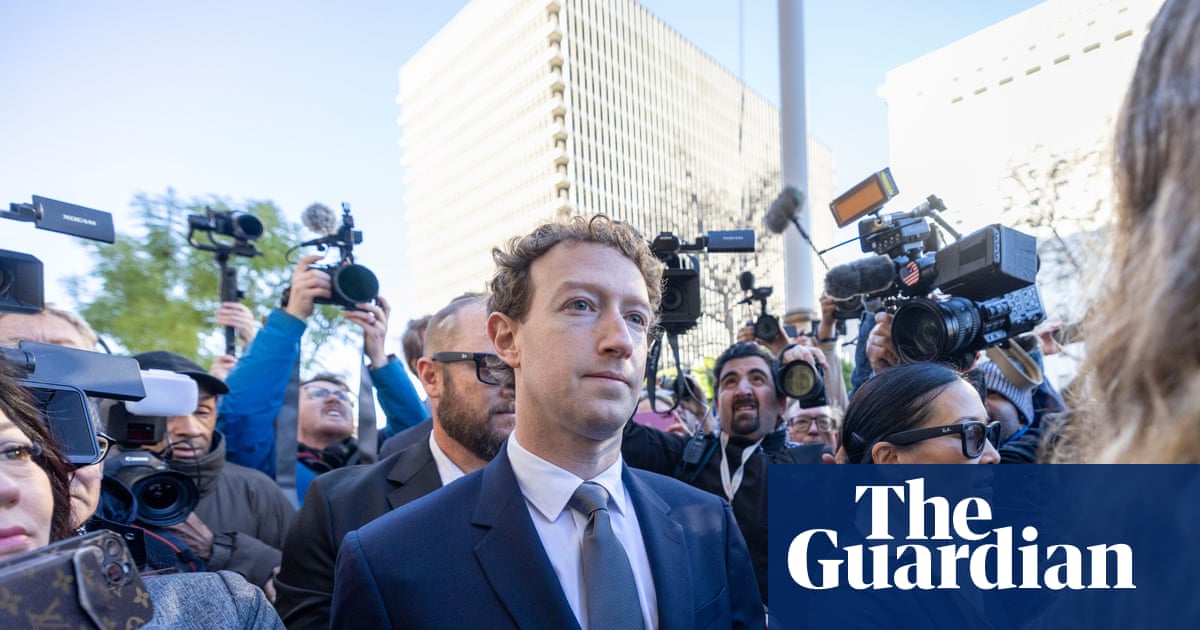
For Meta, the settlement is also a victory. Its share price rose in the hours after the deal was announced. Its CEO, Mark Zuckerberg, was not forced to testify. The sum it is to pay, while not meaningless, is far less than the states had sought – $200bn – or the amount Meta itself had suggested in a court filing it might have to pay, which was up to $1.4tn.
For the rest of the world, however, the picture is more mixed. The limits Meta will put on its US platform are, in large part, similar to limits the UK and Australia have already achieved through regulation. There are certain concessions Meta has now made that other governments could also demand: for example, while the UK plans to ban under-16s from social media platforms, it may wish to ask Meta to impose a default daily use limit of two hours for under-18s, which is what the company has agreed to in the US.
None of this meaningfully changes the equation for Meareg or what his case represents, which is that a massive US company, unaccountable to voters, unbound by transparency requirements, owns a worldwide digital commons that shapes reality for billions of people.
Whether courts and governments outside the US have the power to confront this fact is a far thornier question.
The central issue of Meareg’s case is Meta’s algorithm. This is the system that decides what content to show users of Facebook and Instagram. It sees you linger over a video about knitting sweaters, for example, and then decides you’ll like one about how to care for your spider plant.
It sees teenage girls watch diet content and shows them anorexia influencers. It sees young men search for bodybuilding content and shows them Andrew Tate. It is alleged to have amplified content that promoted the ethnic cleansing of the Rohingya in Myanmar. It contributed to the election victory of Donald Trump.
Meareg’s lawsuit rests on the claim that this algorithm promoted the posts that called for the death of his father, and that Facebook’s sparse moderation in east Africa did almost nothing to prevent this.
In the early days of the Meta trial in the US, it seemed plausible that states would push the social media firm to finally make some changes to this algorithm. Those changes had the potential to fundamentally alter how the company does business. Meta’s algorithm is intended to keep users scrolling, stuck on the platform, and then it shows them ads.
But that is not what appears to have happened. The terms of the settlement will slightly change what is shown to minors, in that they will not necessarily have personalised feeds. But it is hard to see this concession changing the equation in war zones or creaking democracies.
Arturo Béjar, an ex-Facebook employee and whistleblower, said the limitations were “the equivalent of saying: ‘Well, you can smoke as many cigarettes as you can in two hours a day.’ It doesn’t make the cigarettes any safer.”
It may be up to groups and individuals elsewhere in the world to try to push for these larger changes. It will be an uphill struggle.
In Kenya, the high court recently ruled that Meareg’s case against Meta could go ahead, after years of legal manoeuvring from the company to try to prevent it. It could now be heard in the next year.
Rosa Curling, Foxglove’s co-executive director, said: “Meta’s lawyers have spent years trying to prevent this important case being heard, thankfully without success. We hope that the news from the US is a sign that Mark Zuckerberg’s time is finally up.”
In the Netherlands, Repro Uncensored, a nonprofit organisation tracking digital censorship, hailed the US settlement as a “major victory”. Repro Uncensored has an ongoing legal case against Meta in the Netherlands for alleged discrimination against queer accounts, and plans further action in other European countries.
Martha Dimitratou, Repro Uncensored’s executive director, said: “The next stage of accountability must address not only addictive design but algorithms, discriminatory moderation and automated decision-making. These systems shape civic participation and democracy, and the companies controlling them must be held accountable globally.”
The European Commission released