In his trailblazing work, paint is pushed through the back of hemp to create spare, striking paintings. Abstraction is a form of rebellion, he says – and he has no intention of slowing down
‘The technique was revolutionary’: Ha Chong-Hyun, the 91-year-old South Korean artist who turned painting inside out
In his trailblazing work, paint is pushed through the back of hemp to create spare, striking paintings. Abstraction is a form of rebellion, he says – and he has no intention of slowing down In the early 1970s, the Korean artist Ha...
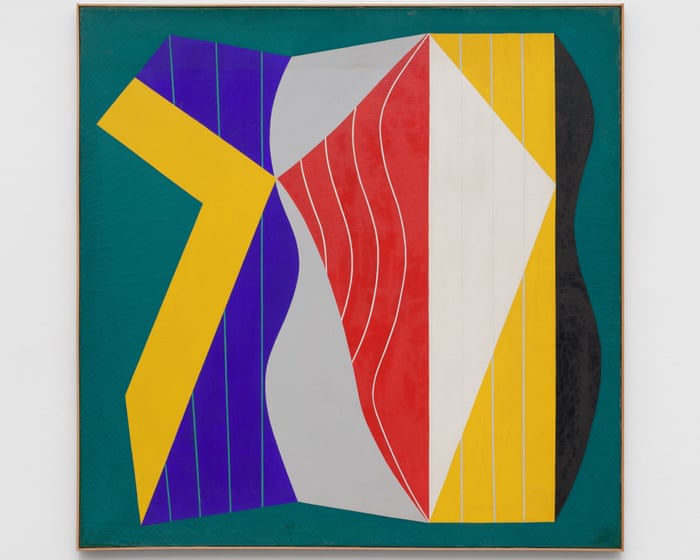
Instead of canvas, he stretched pieces of hemp, a coarse and loosely woven fabric, and pushed the thick oil paint through the holes in the cloth. For each work he used a single colour, in a neutral or muted tone such as white or brown.
- On the “front” side, he then moved the paint around with various handmade tools to create something akin to brushstrokes.
- Ha, now 91, has remained dedicated to this technique, known as the “back-pressure method” (bae-ap-bub in Korean), ever since.
Leitura editorial organizada apenas com informações contidas nesta matéria e na fonte identificada.
In the early 1970s, the Korean artist Ha Chong-Hyun had a simple but novel idea: why not apply oil paint to the back of a surface rather than the front? Instead of canvas, he stretched pieces of hemp, a coarse and loosely woven fabric, and pushed the thick oil paint through the holes in the cloth. For each work he used a single colour, in a neutral or muted tone such as white or brown. On the “front” side, he then moved the paint around with various handmade tools to create something akin to brushstrokes.
Ha, now 91, has remained dedicated to this technique, known as the “back-pressure method” (bae-ap-bub in Korean), ever since. He titles every piece Conjunction – because for him the work is essentially about the coming together of artist and material – along with numbers denoting the date of its creation. “The technique he developed was really revolutionary. It hadn’t been done before,” says Max Bossier, director at Lisson Gallery in London, where a selection from this decades-spanning body of work, alongside several of Ha’s earlier artistic experiments, will go on view in September.