Giant frog that "mooes like an ox" reappears in Florianópolis and mobilizes task force The city of Florianópolis reported, this Monday (13), that it is monitoring two new possible sightings of the bullfrog, an invasive exotic species that threatens the local fauna and that began to be monitored by the Municipal Environmental Foundation (Floram) after being identified in the Ratones neighborhood, in the North of the capital. The amphibian has caught the attention of residents because it produces a sound similar to the mooing of an ox (listen to audio from one of the records in the city above). ?Click and follow the g1 SC channel on WhatsApp ? ? The species is in the highest alert category (Category 1) on the list of invasives in Santa Catarina, a classification that guides the management of the species in the state. The animals will undergo analysis, including testing for ranavirus and chytridiomycosis. The bullfrog (Aquarana catesbeiana) was first seen in Florianópolis in October 2025. The last official record of the amphibian was in March this year, according to Floram. Now, the Department of Conservation Units (DEPUC) has received two new records of possible sightings, which are being analyzed. Frog produces a sound that looks like mooing. The amphibian draws the attention of residents because it produces a sound similar to an ox's mooing. According to the head of the Ecology and Zoology department at the Federal University of Santa Catarina (UFSC), Paulo Cristhiano Anchieta Garcia, the noise is produced by the male during the process of attracting the female for reproduction. "It is precisely this sound that can help researchers locate the invasive species in Florianópolis. The frog, native to North America, arrived in Brazil in the 1930s to produce captive meat. But what was supposed to remain in the breeding grounds ended up escaping into the wild. And today it is considered one of the most worrying invasive species for biodiversity", highlights the researcher. Known for its size and for being used in aquaculture, the amphibian ended up spreading to several places around the world through escape and release and became "one of the worst invasive species in the world", according to the Amphibian and Reptile Ecology Laboratory. Invasive bullfrog is now monitored in Florianópolis Impacts on biodiversity and health risks Although it does not pose any risk to humans, the bullfrog is a severe threat to local fauna. Because they are large animals — an adult can weigh up to 1.5 kilos and measure almost 20 centimeters — they are voracious competitors and predators. The animals feed on insects and other small vertebrates, such as fish, reptiles, birds and small mammals, which can affect production chains such as fish farming itself. Furthermore, the species is very resistant and acts as a disease transmitter. "They are very resistant species. So, both a fungus has been identified, which is called chytrid fungus, which exclusively affects other amphibians, and more recently a virus has been discovered, which is called ranavirus, which can also affect amphibians and fish", highlights Garcia. Florianópolis asks for help from the population Floram reported that it has focused on environmental education activities, in partnership with UFSC, to help map the species in the city. The objective is to involve schools, residents and communities in participatory mapping and encourage the population to report places of occurrence or where the frog's characteristic sound is heard. In these cases, the city council advises you to report the incident to Floram by email at fdepuc.floram@gmail.com or via WhatsApp (48) 3237-5660. Management should not be carried out alone. Bullfrog was found again in Florianópolis Morgana Fernandes/NSC TV VIDEOS: g1 SC's most watched in the last 7 days
Invasive giant frog that 'mooes like an ox' and puts fauna at risk in SC mobilizes researchers; LISTEN
Giant frog that "mooes like an ox" reappears in Florianópolis and mobilizes task force The city of Florianópolis reported, this Monday (13), that it is monitoring two new possible sightings of the bullfrog, an invasive exotic species that...
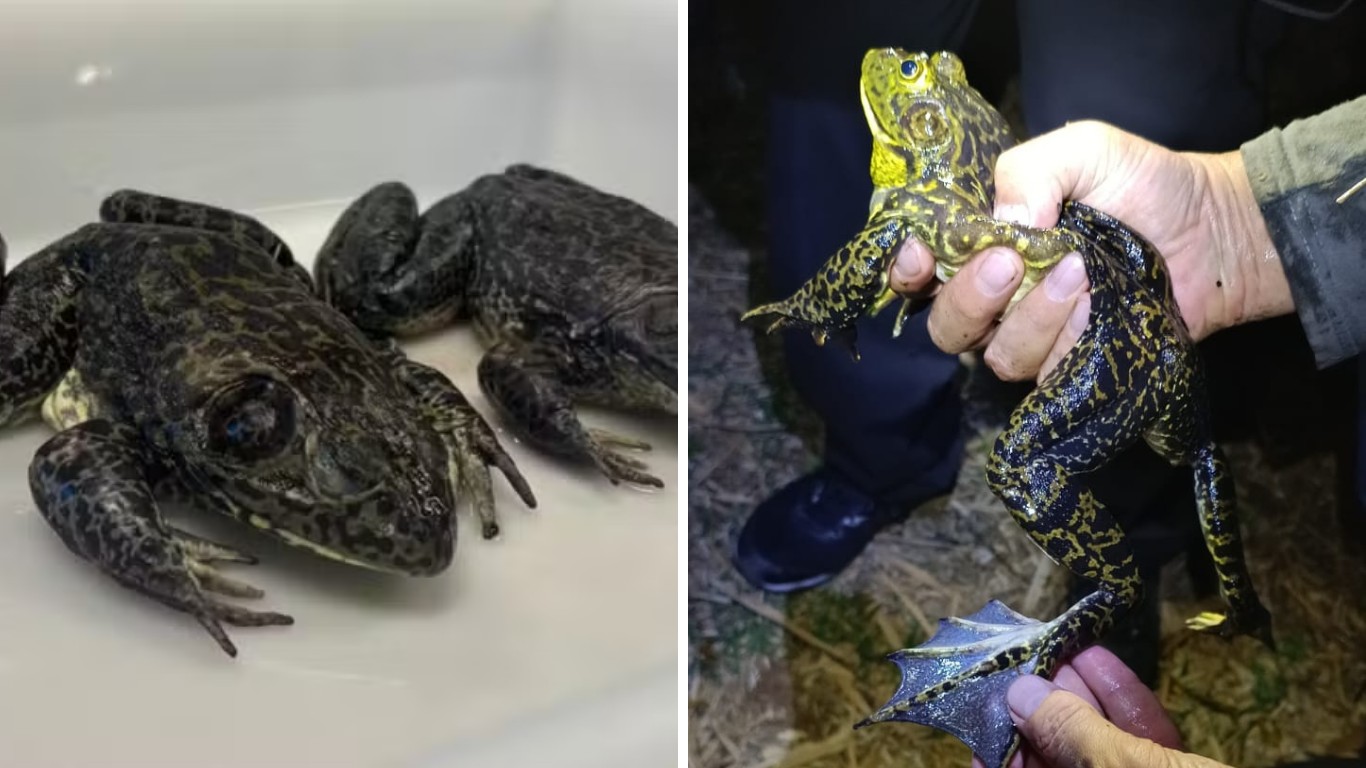
?Click and follow the g1 SC channel on WhatsApp ? The species is in the highest alert category (Category 1) on the list of invasives in Santa Catarina, a classification that guides the management of the species in the state.
- The animals will undergo analysis, including testing for ranavirus and chytridiomycosis.
- The bullfrog (Aquarana catesbeiana) was first seen in Florianópolis in October 2025.
Editorial reading aid based only on information contained in this story and its identified source.