(FOLHAPRESS) - The water level in the Cantareira System, responsible for around half of the supply in the metropolitan region of São Paulo, is at 35.3% of its total volume, close to that recorded a year ago. On August 13, 2025, the reservoir was at 38.4%.
Drop in the level of Cantareira slows down with contingency measures
(FOLHAPRESS) - The water level in the Cantareira System, responsible for around half of the supply in the metropolitan region of São Paulo, is at 35.3% of its total volume, close to that recorded a year ago. On August 13, 2025, the...
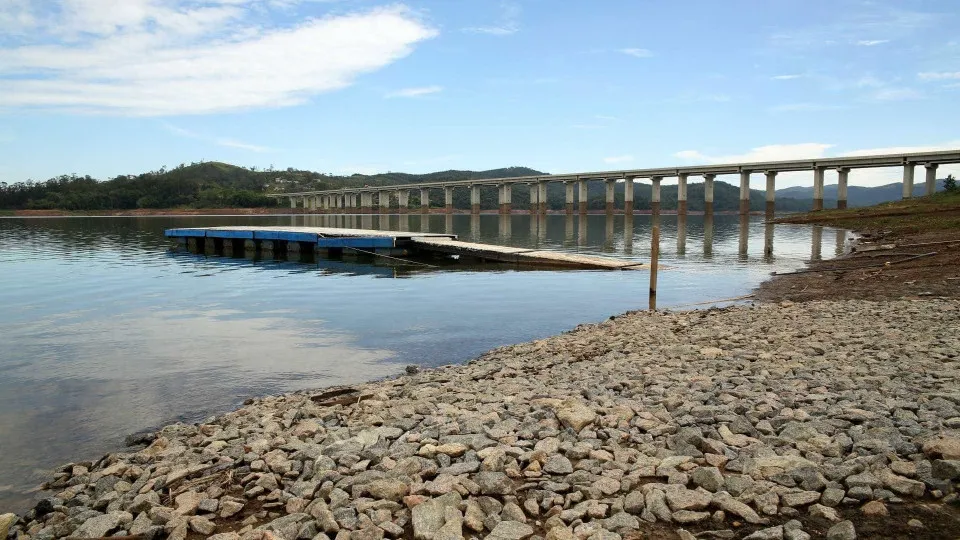
As this year began with the lowest reservoir level since the great water crisis of 2014 and 2015, with 19.29% on January 13, there was the expectation of a much more significant drop. However, measures adopted by Sabesp last year, such as reducing water pressure in the pipes during the night and increasing intake from the system that supplies part of the...
- However, measures adopted by Sabesp last year, such as reducing water pressure in the pipes during the night and increasing intake from the system that supplies part of the state of Rio de...
- The so-called GDN (Night Demand Management) began precisely in August 2025.
- According to Sabesp, since then, the initiative has saved around 191 billion liters of water as of this Thursday (13), equivalent to the consumption of approximately 33 million people, more...
Editorial reading aid based only on information contained in this story and its identified source.
As this year began with the lowest reservoir level since the great water crisis of 2014 and 2015, with 19.29% on January 13, there was the expectation of a much more significant drop.
However, measures adopted by Sabesp last year, such as reducing water pressure in the pipes during the night and increasing intake from the system that supplies part of the state of Rio de Janeiro, caused the drop in the Cantareira level to slow down.
The so-called GDN (Night Demand Management) began precisely in August 2025. According to Sabesp, since then, the initiative has saved around 191 billion liters of water as of this Thursday (13), equivalent to the consumption of approximately 33 million people, more than twice the population of the capital of São Paulo, for a month.
The increase in abstraction from the Jaguari River, in the Paraíba do Sul River basin, was authorized by ANA (National Water Agency) on June 29th. With the approval, the maximum annual volume of water that can be transferred from the Jaguari plant to the Atibainha reservoir in 2026 increases from 162 hm³ (cubic hectometers, or 162 billion liters) to up to 268.28 hm³, an increase of 66%. The measure is valid until December 31st.
According to ANA, the temporary increase in the transposition quota had already been adopted in 2021 and 2025, given the persistence of drought conditions.
Another factor that helped reduce the rate of decline in the Cantareira was the higher-than-expected rainfall in June, especially in the tributaries that supply the system.
The higher than expected inflows that month and in the week of July 20th to 26th, when a volume of 31.6 mm of rain was recorded, 177% above what was predicted in meteorological models, led to the change from band 3 to 2 in the Cantareira contingency curve, which is part of the water management methodology of the state of São Paulo.
This state lane change is different from that applied by ANA and SP Águas with regard to the Cantareira operation. In this case, the system remains in alert band 3, which establishes that Sabesp will be able to remove up to 27 cubic meters per second from the system.
With the change, Arsesp (Public Services Regulatory Agency of the State of São Paulo), following the recommendation of the Agency Integration Committee for Water Security, composed of Arsesp and SP Águas, announced, on July 31, the reduction of GDN from 10 to 8 hours throughout the metropolitan region of the capital.
There is still an expectation of a greater drop both in Cantareira and in the entire SIM (Metropolitan Integrated System), made up of six other systems: Alto Tietê, Cotia, Guarapiranga, Rio Claro, Rio Grande and São Lourenço. Currently, the set is at 46.2% of its capacity.
This is because the El Niño phenomenon is already a reality, increasing the temperature in the central region of the country and delaying the start of the rainy season, which normally starts in October. The longer the heavy rains take to arrive, the greater the drop in reservoir levels could be.
How to identify signs that teens are being coerced online and start a dialogue without intimidating
Experts point out changes in behavior that may indicate coercion or exposure to risk groups on the internet and guide families on how to talk to teenagers, establish limits and act when faced with threats, blackmail or situations that put their lives in danger