A 9-year-old Brazilian girl, who lives in the Metropolitan Region of Belo Horizonte, had a laughing fit that lasted more than three hours. Worried about her daughter, the mother took her to the hospital and discovered something that was a huge (and unpleasant) surprise.
Girl has a laughing fit lasting more than 3 hours (which hides a health problem)
A 9-year-old Brazilian girl, who lives in the Metropolitan Region of Belo Horizonte, had a laughing fit that lasted more than three hours. Worried about her daughter, the mother took her to the hospital and discovered something that was a...
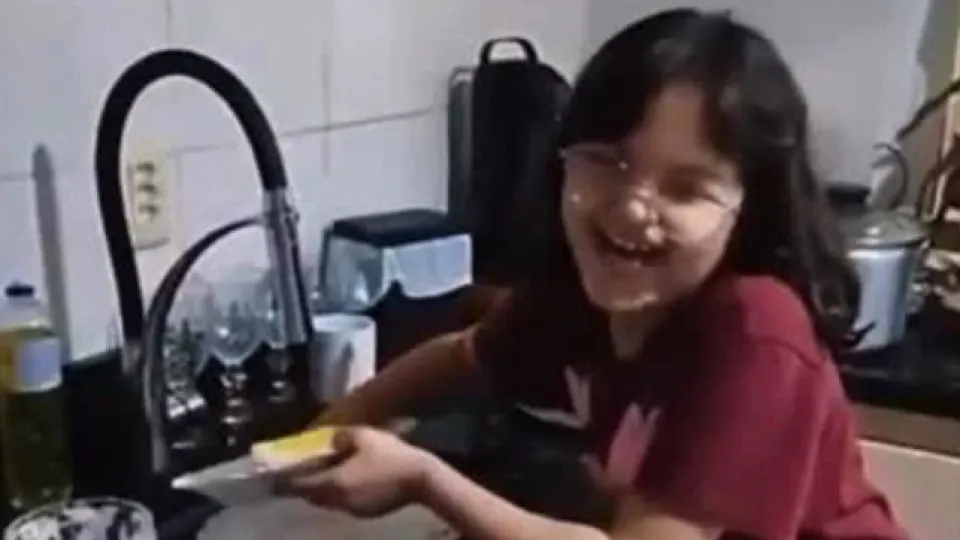
Eduarda Barbosa was at home with her mother, Alinne Barbosa, 38, a photographer and nursing student, and her sisters when she started laughing uncontrollably. Alinne also laughed, as did Dudley's sisters, as the girl is called by those closest to her.
- However, the girl didn't stop laughing, not even when everyone remained silent.
- Duda was conscious and responded through gestures, but he could not control his laughter or speak.
Editorial reading aid based only on information contained in this story and its identified source.
According to the newspaper Metrópoles, it all started with a joke.
Eduarda Barbosa was at home with her mother, Alinne Barbosa, 38, a photographer and nursing student, and her sisters when she started laughing uncontrollably.
Alinne also laughed, as did Dudley's sisters, as the girl is called by those closest to her.
However, the girl didn't stop laughing, not even when everyone remained silent. Duda was conscious and responded through gestures, but he could not control his laughter or speak.
Upon noticing that her daughter's pupils were dilated and that there was a change in her gaze, Alinne decided to take her to the Contagem Municipal Hospital.
The episode was considered isolated by the medical team that treated her. Duda was not diagnosed with epilepsy, as was previously thought. She would have had a “gelastic seizure”, that is, a “rare epileptic manifestation marked by involuntary episodes of laughter”.
Just kidding? No!
Before realizing that it could be a health problem, Alinne thought that her daughter was simply “being funny”.
“I asked if I was dirty or if I had written clown on my face and she continued laughing,” he reported.
However, now he knows that it was something much more serious. After several tests, the pediatrician who treated Duda explained that the episode had been “isolated”, “triggered by anxiety or stress, in which she, being a child, was unable to express what she was feeling, vent what was happening”, said the mother.
On the Brazilian website, neurologist and clinical neurophysiologist Victor Hugo Castro de Sá explained that a "gelastic crisis is a rare type of epileptic seizure. The condition presents episodes of involuntary laughter. The person laughs without feeling joy, as laughter is triggered by an abnormal electrical discharge in the brain, linked to a benign lesion called hypothalamic hamartoma."
"Among the possible causes is hypothalamic hamartoma, a benign lesion, that is, non-cancerous, located in the region of the hypothalamus. This is the association considered classic with gelastic crises in childhood", he highlighted.
According to the doctor, in these cases, “laughter is purely mechanical and neurogenic (generated by an abnormal electrical discharge in the brain), without the patient actually feeling joy.”
One of the main signs of a “gelastic crisis” is precisely the absence of a situation that justifies laughter. The episode may begin suddenly, without a joke, comic stimulus or apparent reason.
The doctor also highlighted that laughter can also present a different aspect than usual, appearing forced, artificial or even robotic, without the emotional expression normally associated with joy.
In general, the “crisis” is brief, lasting from a few seconds to less than a minute. Another important characteristic is that the person cannot interrupt the episode of their own accord.
In addition to laughter, according to the specialist, other signs may appear, such as a slight change in consciousness, staring, redness in the face, increased heart rate and automatic movements, such as smacking the lips.
Other brain changes may also be related to the condition: benign or malignant tumors, cortical dysplasias and vascular malformations located in the temporal or frontal lobes.
What to do?
Faced with a case like Duda's, it is advisable to pay attention to “the person's safety”, “remain calm and place them in a safe environment, such as a soft chair or the floor, removing objects that could cause injury”.
You should not try to hold the person down or stop them from laughing by force. It is also important not to put your fingers or any object in your mouth.
Time the episode and note changes, loss of consciousness, and other signs. If possible, make a video to show the doctors.
After the episode ends, recalled Victor Hugo Castro de Sá, the person may become confused, tired or embarrassed. At this time, “offer reassurance and support.”
Given the situation she experienced, Duda's mother considered that the best thing would be to alert other people about symptoms that are still unknown to many.
Read Also: Claps, screams and tears. Bragança got dark in broad daylight