Iran raised its tone against the United States this Monday (17) by announcing a change in the way it intends to conduct its military actions. A senior member of the Revolutionary Guard stated that, even in defensive operations, the country's Armed Forces will adopt a more offensive posture in the face of possible threats.
Iran threatens US with "strategic surprises" and "offensive" posture
Iran raised its tone against the United States this Monday (17) by announcing a change in the way it intends to conduct its military actions. A senior member of the Revolutionary Guard stated that, even in defensive operations, the...
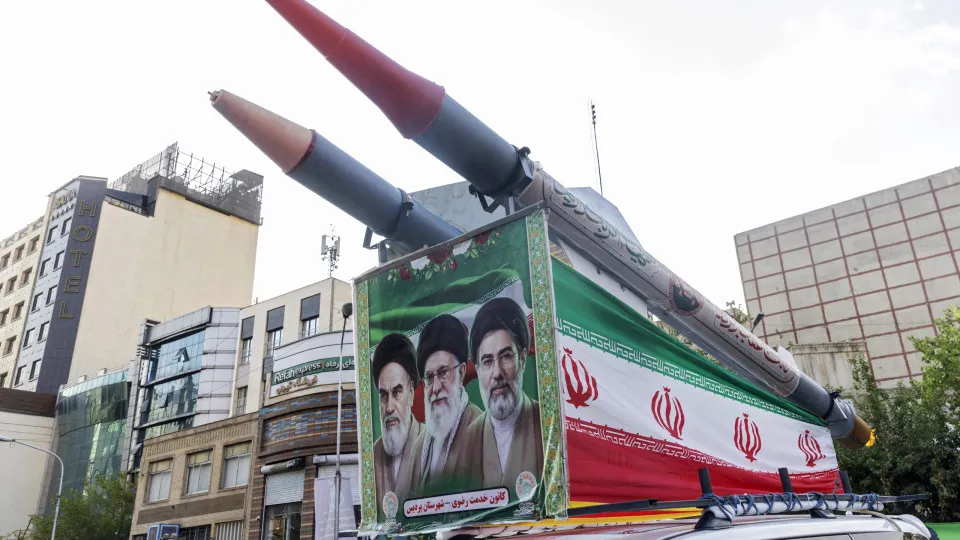
The statement was made by General Yadollah Javani, responsible for political affairs in the Revolutionary Guards, during an interview with Iranian state television. According to him, Tehran is working on a reorganization and modernization of its defense doctrine, with changes designed to increase its ability to anticipate its adversaries.
- "The enemy must know that they cannot carry out surprise attacks or catch us off guard.
- Perhaps they should expect strategic surprises," declared Javani.
Editorial reading aid based only on information contained in this story and its identified source.
The statement was made by General Yadollah Javani, responsible for political affairs in the Revolutionary Guards, during an interview with Iranian state television. According to him, Tehran is working on a reorganization and modernization of its defense doctrine, with changes designed to increase its ability to anticipate its adversaries.
"The enemy must know that they cannot carry out surprise attacks or catch us off guard. Perhaps they should expect strategic surprises," declared Javani.
According to the general, Iranian forces should adopt approaches considered "transformative". The orientation is in line with recent changes promoted at the military leadership by supreme leader Mojtaba Khamenei, who reinforced strategic positions with members of the Revolutionary Guard.
Deadlock over Strait of Hormuz increases tension
Tehran's new message comes at a time of intense dispute with Washington over control and navigation in the Strait of Hormuz, a strategic passage for the world energy market. Before the current conflict, around a fifth of the oil and liquefied natural gas traded globally passed through the region.
Iranian authorities claim that the sea passage is under Tehran's control and maintain that ships cannot cross the strait without authorization from the country. The United States rejects this position and maintains naval forces in the region with the argument of guaranteeing freedom of navigation.
Last week, US President Donald Trump claimed that Washington had "complete control" of the Strait of Hormuz. The statement was immediately contested by Iranian authorities, who reiterated that they do not intend to fully reopen the crossing until the conditions previously agreed with the Americans are met.
Agreement between Iran and the US collapsed
Iran and the United States had reached a provisional understanding in June to halt major military operations and try to advance negotiations on Gulf security and the movement of ships through Hormuz. The agreement, however, began to fall apart a few weeks later.
The two parties began to accuse each other of non-compliance. Iran resumed limited attacks on vessels that, according to Tehran, violated agreed conditions, while the United States resumed bombing targets in southern Iran with the stated aim of reducing the country's ability to attack ships in the region.
This Monday ends the 60-day period foreseen in the memorandum signed in June to try to reach a definitive agreement. There is conflicting information about a possible extension. Sources in Pakistan stated that the two countries had agreed to extend the understanding, while Tehran declared that no negotiations to formally extend the deadline had taken place.
Iran talks of "offensive war" if conditions are not met
Javani's speech is not an isolated episode. Mohammad Mokhber, an adviser to the Iranian supreme leader, had already stated that Tehran's strategy could shift to an "offensive war" if the country's demands were not met.
Mokhber also defended a new regional security architecture less dependent on the military presence of the United States and associated with an Iranian-led mechanism for circulation in the Strait of Hormuz.
On the other hand, the United States Central Command claims to have significantly reduced Iranian military capacity during the months of conflict. In a document presented to the American Senate, Centcom maintains that the operations affected missile systems, drones, air defense structures and part of Iran's naval capacity. Washington, however, recognizes that Tehran is still able to carry out attacks and smaller-scale actions.
Monday's statements reinforce Tehran's change of tone just as the temporary agreement reaches a decisive point. Without a new understanding between the two countries, the impasse over Hormuz and the adoption of a more aggressive military posture by Iran increase the risk of a new escalation in the confrontation with the United States.
United States threatens Iran with "unprecedented" economic isolation
US Treasury Secretary Scott Bessent said Washington was preparing new measures against Tehran and cited unprecedented economic isolation. The statement comes as the impasse over the reopening of the Strait of Hormuz keeps tensions high in the region