The United States Department of State denied this Thursday (13) that the North American government has a plan to prevent the re-election of President Luiz Inácio Lula da Silva. According to g1, an official not identified by the website stated that the US will respect “any government” chosen by Brazilians in free and fair elections held in October.
US denies having a plan to prevent Lula’s re-election
The United States Department of State denied this Thursday (13) that the North American government has a plan to prevent the re-election of President Luiz Inácio Lula da Silva. According to g1, an official not identified by the website...
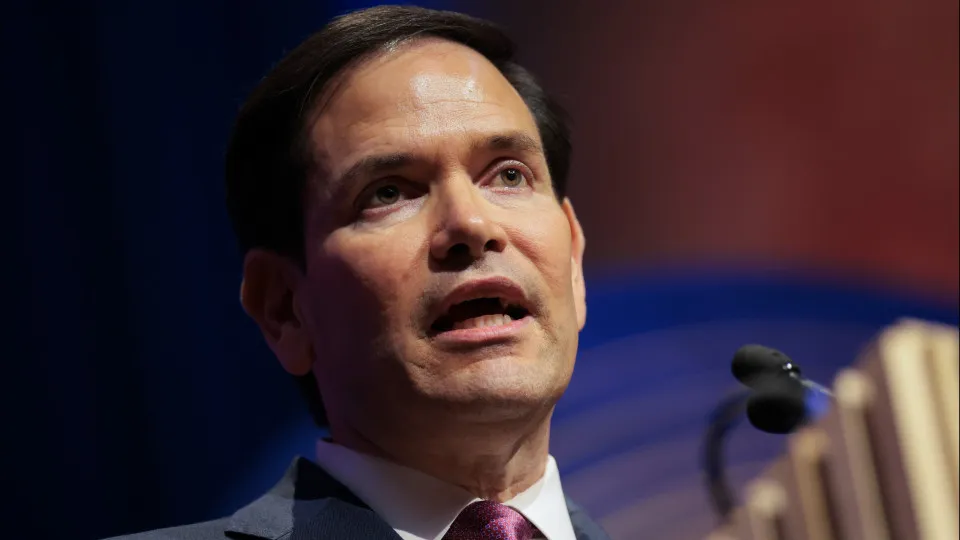
The statement came after information that members of the Lula government believed that the American Secretary of State, Marco Rubio, would be interested in preventing the Brazilian president from remaining in office. According to a State Department source, however, this assessment does not correspond to reality.
- "We attach great importance to the relationship with Brazil.
- We respect the Brazilian people and any government they freely choose, through free and fair elections in Brazil," the official said, without directly citing Rubio.
Editorial reading aid based only on information contained in this story and its identified source.
The statement came after information that members of the Lula government believed that the American Secretary of State, Marco Rubio, would be interested in preventing the Brazilian president from remaining in office. According to a State Department source, however, this assessment does not correspond to reality.
"We attach great importance to the relationship with Brazil. We respect the Brazilian people and any government they freely choose, through free and fair elections in Brazil," the official said, without directly citing Rubio.
Despite the denial, the expression “free and fair elections” has previously been used by the Donald Trump government in statements related to electoral processes in other countries. In Brazil, the electoral system is considered free, and the Superior Electoral Court (TSE) states that electronic voting machines are safe.
Crisis between Brazil and USA
The perception of members of the Lula government that Rubio could have a plan against reelection would have been reinforced after the Trump administration released a video stating that the United States' dominance over America “will never be questioned again”.
Brazil and the United States are going through a phase of diplomatic crisis precisely during the period leading up to the Brazilian presidential elections, scheduled for the first and third weekends of October.
Among the episodes that increased tension is a montage of Lula handcuffed and blindfolded in place of former Venezuelan dictator Nicolás Maduro, arrested by the US in January. There were also sanctions against Brazilian authorities, including the cancellation of the visa of the Brazilian ambassador in Washington and the application of the Magnitsky Law to Minister Alexandre de Moraes in 2025.
Another point of conflict is the successive tariff increases imposed by the American government on Brazilian products.
Role of Marco Rubio
Marco Rubio is considered one of the main authorities of Donald Trump's second term and is considered responsible for a new stage of the Monroe Doctrine, a strategy that the United States seeks to apply in the Western Hemisphere. Experts interviewed by the podcast O Assunto also point to him as the pivot of the current crisis between the two countries.
The secretary has already adopted tougher positions in relation to Brazil and exchanged public criticism with Lula.
The Trump administration also seeks to bring Latin American countries closer to their interests and reduce the influence of Russia and China in the region. In this scenario, countries such as Peru, Colombia, Chile, Bolivia and Argentina began to have governments ideologically aligned with Trump. As a result, Brazil became the most relevant country in the region governed by the left.
Read Also: Dollar rises and Stock Exchange falls with US inflation and foreigners leaving on the radar