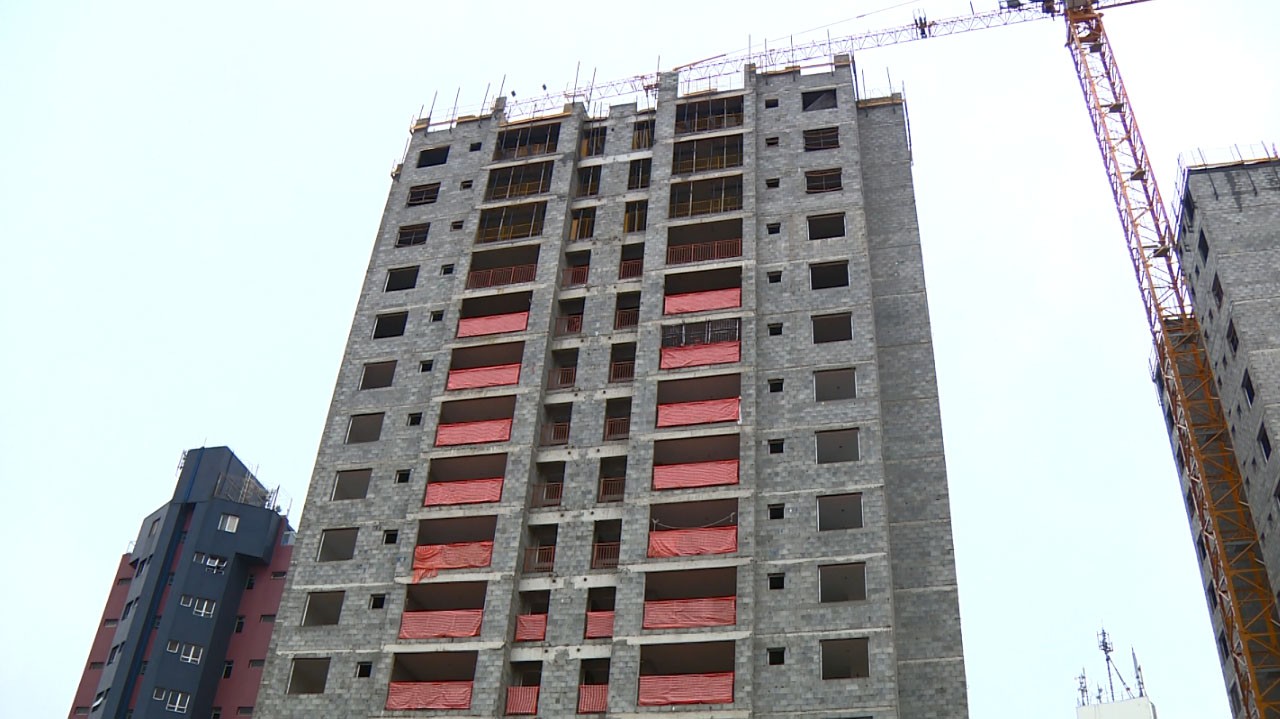
File photo of a project under construction in Campinas (SP) Reproduction/EPTV Civil construction in Campinas (SP) shows signs of a slowdown in the generation of formal jobs. An analysis based on data from the General Register of Employed and Unemployed Persons (Caged) shows a deterioration in vacancies in the sector since the second half of 2025. In 2026, the sector went from a positive balance of 334 vacancies in January to job closures in April (-216) and May (-458), interrupting the pace of hiring observed at the beginning of the year. In the assessment of economist Eli Borochovicius, professor at PUC-Campinas, the slowdown may be related to a combination of economic factors that directly affect the real estate market, such as high interest rates, loss of family purchasing power and increased construction costs. ? Follow g1 Campinas on Instagram According to the economist, more expensive credit makes it difficult to acquire financed properties, the main modality used by buyers. The Monetary Policy Committee (Copom) of the Central Bank (BC) reduced the economy's basic interest rate, the Selic, from 14.50% to 14.25% per year in June. The rate above double digits, however, still makes credit more expensive. "In civil construction, it is very rare for someone to buy a property in cash. With more expensive financing and high default rates, the sale of properties tends to decrease. Consequently, you reduce construction and also hiring", says Borochovicius. In addition to the cost of financing, the economist highlights that salaries have not increased at the same speed as inflation in recent years, reducing the population's purchasing capacity. Another factor cited by the expert is the increase in prices of inputs used in construction, such as steel, aluminum, wood and imported products. With higher costs, he explains, construction companies end up passing on part of the increases to the final value of the projects, which can make sales difficult. "There comes a certain point where you cannot increase the price of units indefinitely. This reduces the supply of new developments and, consequently, the hiring of professionals", he says.
Employment in construction is on a downward trend in Campinas; high interest rates and higher costs explain the decline
File photo of a project under construction in Campinas (SP) Reproduction/EPTV Civil construction in Campinas (SP) shows signs of a slowdown in the generation of formal jobs. An analysis based on data from the General Register of Employed...
In 2026, the sector went from a positive balance of 334 vacancies in January to job closures in April (-216) and May (-458), interrupting the pace of hiring observed at the beginning of the year. In the assessment of economist Eli Borochovicius, professor at PUC-Campinas, the slowdown may be related to a combination of economic factors that directly affect...
- In the assessment of economist Eli Borochovicius, professor at PUC-Campinas, the slowdown may be related to a combination of economic factors that directly affect the real estate market,...
- Follow g1 Campinas on Instagram According to the economist, more expensive credit makes it difficult to acquire financed properties, the main modality used by buyers.
- The Monetary Policy Committee (Copom) of the Central Bank (BC) reduced the economy's basic interest rate, the Selic, from 14.50% to 14.25% per year in June.
Editorial reading aid based only on information contained in this story and its identified source.
Real estate market Despite the slowdown in employment, Borochovicius considers that real estate market indicators do not yet point to a sharp drop in demand. Data from research by the Housing Union (Secovi-SP) in partnership with Brain Intelligence Estratégica show that the Campinas region registered 1,314 units launched in the 1st quarter of 2026, a drop of 47.1% compared to the same period in 2025 (2,488). The number of units sold in the first three months of the year reached 3,215, a decrease of 15.6% compared to the first quarter of 2025 (3,808). The stock of properties in the region is 10.5 thousand units, with an expected sale in 9 months. For the economist, the indicators show that the market continues to absorb units at a considerable pace. "More was sold than was launched. Inventory does not seem high and sales continue at a level that I consider healthy", he assesses. In the professor's interpretation, the data suggests that the slowdown in hiring may be more linked to companies' caution regarding costs and financing conditions than to a lack of demand for properties.
Seasonal component The expert also draws attention to a recurring behavior in Civil Construction observed in the Caged series. When comparing results from recent years, the largest hiring balances tend to occur in the first months of the year, while performance generally loses momentum in the second half of the year. The data helps illustrate this trend. In 2024, the sector opened 889 vacancies in January and 405 in February, but ended December with a negative balance of 397 positions. In 2025, 249 vacancies were created in January and 664 in February, while December ended with 882 vacancies closed. According to Borochovicius, the month of May itself tends to be weaker for construction when compared to the first months of the year. "Caged shows that most hiring occurs at the beginning of the year. Historically, the months of October, November and December are weaker for the sector", he states. Given this history, the economist assesses that civil construction is unlikely to register a strong acceleration in employment throughout the second half of 2026. Even so, he emphasizes that the data does not constitute a crisis in the real estate market. For the expert, the scenario is more compatible with a slowdown in the pace of expansion observed in recent years, in a context of high interest rates, higher costs and greater caution on the part of companies and consumers. Archive photo of construction activity in Campinas (SP) Alexandre de Jesus/EPTV VIDEOS: Everything about Campinas and the Region See more news about the region on the g1 Campinas page.