Beard follicles can be used as a complementary donor area in specific cases of hair transplantation. Image Bank The procedure follows the same principles as a conventional hair transplant. The follicles are removed from the beard region — generally below the jawline and neck — and implanted in areas of the scalp that have rarefaction or absence of hair. After transplantation, these follicles maintain the genetic characteristics of the region of origin and continue producing hair normally in the new location. Beard hair, however, has different characteristics than scalp hair, such as thickness, texture and growth pattern. Therefore, the posterior and lateral region of the head continues to be the main source of grafts in most cases. When used, the beard usually acts as a complementary source, helping to increase the number of follicles available for surgical planning. The indication depends on factors such as the extent of baldness, the density of the beard and the characteristics of the hair. A beard can be considered in situations such as: Cases of advanced baldness; Patients who have already undergone previous transplants; Limited availability of follicles in the traditional donor region; Need to increase the total number of grafts available. Using the beard as a complementary donor site has opened doors for patients who were previously considered ineligible due to advanced stage baldness. It is a fantastic evolution that allows us to give hope to those who had already heard that there was no solution. Does the transplanted beard hair look the same as the natural hair on your head? As beard hairs tend to be thicker and more robust, they can be used strategically in certain regions to increase the perception of density. Adequate distribution of the grafts is important to preserve the natural result. The beard region also experiences a reduction in the density of hair removed. Therefore, extraction needs to be carried out carefully to preserve the appearance of the area after healing. When there is good density in the region and the removal is carried out properly, the changes are usually discreet and barely noticeable. A big concern for men is whether their face will be marked. Extraction in the submandibular region uses millimetric surgical punches. With correct healing, the microdots become imperceptible, and the patient can continue to wear a short or shaved beard without fear. Technical Responsible: Dr. Leonora Mansur CRMMG 38734 | EQR 27802
Is it Possible to Transplant Hair from the Beard to the Head?
Beard follicles can be used as a complementary donor area in specific cases of hair transplantation. Image Bank The procedure follows the same principles as a conventional hair transplant. The follicles are removed from the beard region —...
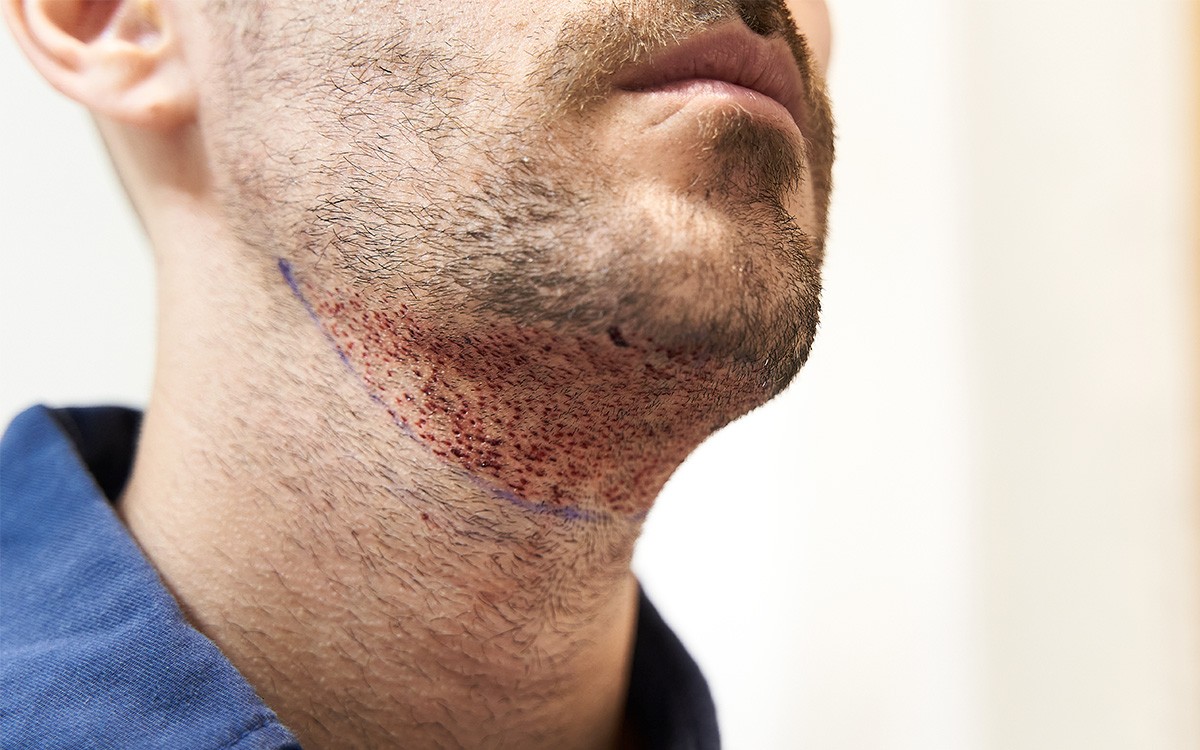
After transplantation, these follicles maintain the genetic characteristics of the region of origin and continue producing hair normally in the new location. Beard hair, however, has different characteristics than scalp hair, such as thickness, texture and growth pattern.
- Therefore, the posterior and lateral region of the head continues to be the main source of grafts in most cases.
- When used, the beard usually acts as a complementary source, helping to increase the number of follicles available for surgical planning.
Editorial reading aid based only on information contained in this story and its identified source.