Carajás Caves held species still unknown to science Jonas Eduardo Gallão Two new species of snails were discovered in caves in Serra dos Carajás, in Pará, during a survey of the region's underground fauna. The identification occurred after three years of scientific expeditions, which investigated 31 caves and found gastropods — a class of animals represented by snails, snails, whelks and slugs — in 15 of them. The study, published in the scientific journal ZooKeys, recorded seven species of terrestrial gastropods. Among them are two new to science: Rectobelus arsayae and Scolodonta carajaensis. ? Also follow Terra da Gente on Instagram The research also represents the first record of living specimens of the Rectobelus genus in Brazil. Until then, records were based only on archaeological material, without confirmation of a current population. The work also brings the first record of the Tamayoa decolorata species in the country. The discovery draws attention because snails are relatively uncommon in cave environments. Furthermore, the caves investigated in Carajás are mainly formed by iron-rich rocks, and not by limestone — an environmental factor normally associated with the occurrence of these molluscs. See more news from Terra da Gente, on g1: NAS ALTURAS: Which vultures are there in Brazil? Discover five species and their differences RARE: Unreleased video shows native bees cleaning the nostrils of mountain eagles in MG ENVIRONMENT: Mamirauá Reserve turns 30 and consolidates conservation model Ferruginous caves Land snails need calcium to build their shells. For this reason, limestone caves — formed by rocks rich in calcium carbonate — tend to offer favorable conditions for these animals. The Carajás caves, however, are associated with ferruginous and silica formations. In other words, the composition of the region's soil has a predominance of iron and silica, and not limestone. See what's highlighted in g1:
Pará Caves hide mysteries; two new species are found
Carajás Caves held species still unknown to science Jonas Eduardo Gallão Two new species of snails were discovered in caves in Serra dos Carajás, in Pará, during a survey of the region's underground fauna. The identification occurred after...
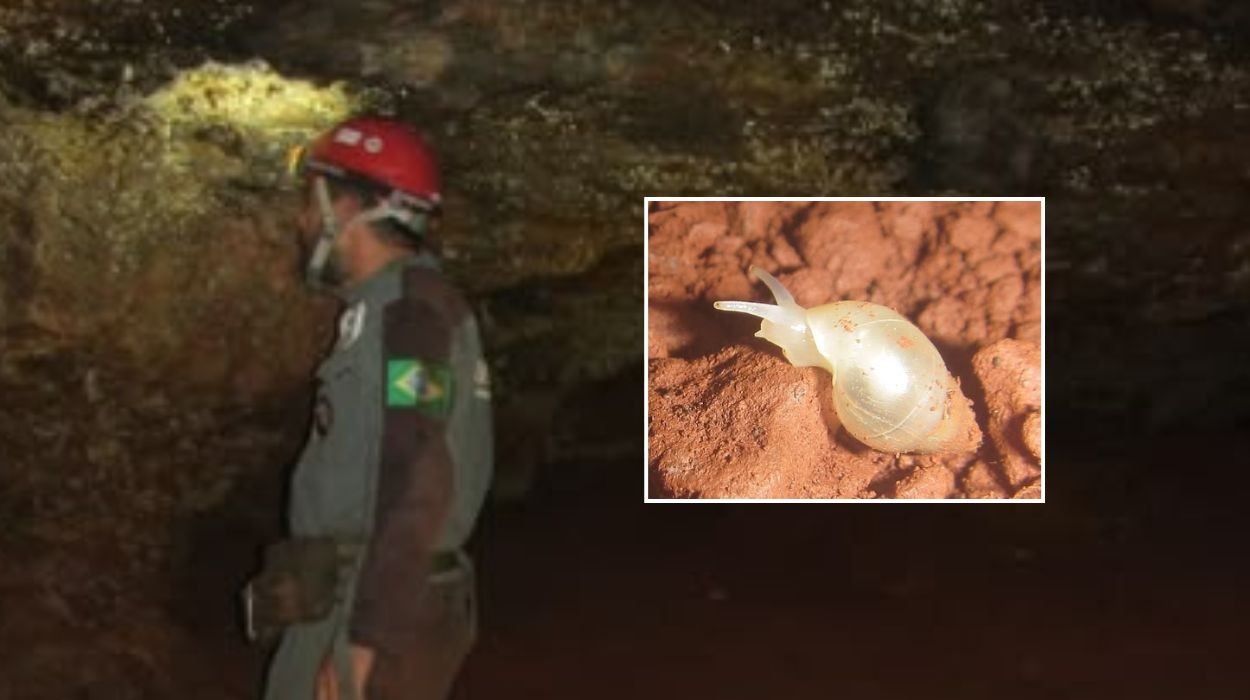
The study, published in the scientific journal ZooKeys, recorded seven species of terrestrial gastropods. Among them are two new to science: Rectobelus arsayae and Scolodonta carajaensis.
- Also follow Terra da Gente on Instagram The research also represents the first record of living specimens of the Rectobelus genus in Brazil.
- Until then, records were based only on archaeological material, without confirmation of a current population.
Editorial reading aid based only on information contained in this story and its identified source.
The study itself highlights that research on gastropods in caves of this type is still at an early stage. According to Rodrigo B. Salvador, researcher and curator of invertebrates at the Finnish Museum of Natural History at the University of Helsinki and one of the study's authors, a possible clue lies in the characteristics of the shells found. “We assume that [calcium sources] must be scarce, as the snail shells there have very thin and translucent walls,” he says. Another aspect caught the attention of researchers. In previously studied limestone caves in Brazil, representatives of several snail families were found. In Carajás, however, the gastropods recorded mainly belong to two families: Achatinidae and Scolodontidae. Of the seven species recorded in the survey, four belong to Achatinidae and three to Scolodontidae. One of them, Systrophia siolii, was found only in the forested areas outside the caves, not inside them. The researchers emphasize, however, that it is not yet possible to say that the availability of calcium is responsible for the lower diversity observed. To do this, it would be necessary to study a greater number of ferruginous caves. After three years of expeditions, scientists discover new species in Pará Jonas Eduardo Gallão Identification Finding an unknown species does not necessarily mean realizing, even during collection, that it is an animal new to science. In many cases, the discovery happens later, during the process of identifying and comparing the specimens. This is what happened with the gastropods from Carajás. According to Laura Ferreira-Santos, a researcher at the Underground Studies Laboratory (LES) at the Federal University of São Carlos (UFSCar), the collected specimens can remain in scientific collections for years until experts are able to analyze them. Two new species of snails are discovered in caves in Pará Laura Ferreira-Santos This problem is known as “taxonomic impediment”, a situation related to the lack of specialists, resources and knowledge necessary to identify and describe biodiversity. “We may have hundreds of specimens collected and stored in scientific collections, but without researchers specializing in that group, many organisms remain without definitive records”, explains Laura. In the case of the two new species, the researchers used different characteristics to differentiate them from other known gastropods. Rectobelus arsayae, for example, has a thin, elongated shell and presents very distinct characteristics. Before the study, there was only one known similar species in Brazil, recorded exclusively in a place with a lot of limestone. Two new species of snails are discovered in caves in Pará B,C: Daniel Caracanhas Cavallari / A,D,E,F: Laura Ferreira-Santos Scolodonta carajaensis is more similar to other species of the same genus. Therefore, identification required the combination of characteristics of the animal's shell and body, in addition to DNA analysis. The specimens studied were deposited in scientific collections at UFSCar and the University of São Paulo (USP), where they remain preserved and can be consulted in future research. Function in the ecosystem Despite their small size, gastropods perform important functions in the environments where they live. In general, land snails feed on fungi, lichens and decaying plant matter. In this way, they participate in the recycling of nutrients and contribute to the functioning of the ecosystem. In the Carajás caves, however, researchers still do not know exactly what these species eat. During the expeditions, some individuals were observed sitting on the guano — accumulated feces — of bats. The observation raised the hypothesis that snails may feed directly on this material